top of page

The Bigger Picture for Kering’s Alexander McQueen Following the Appointment of a New CEO


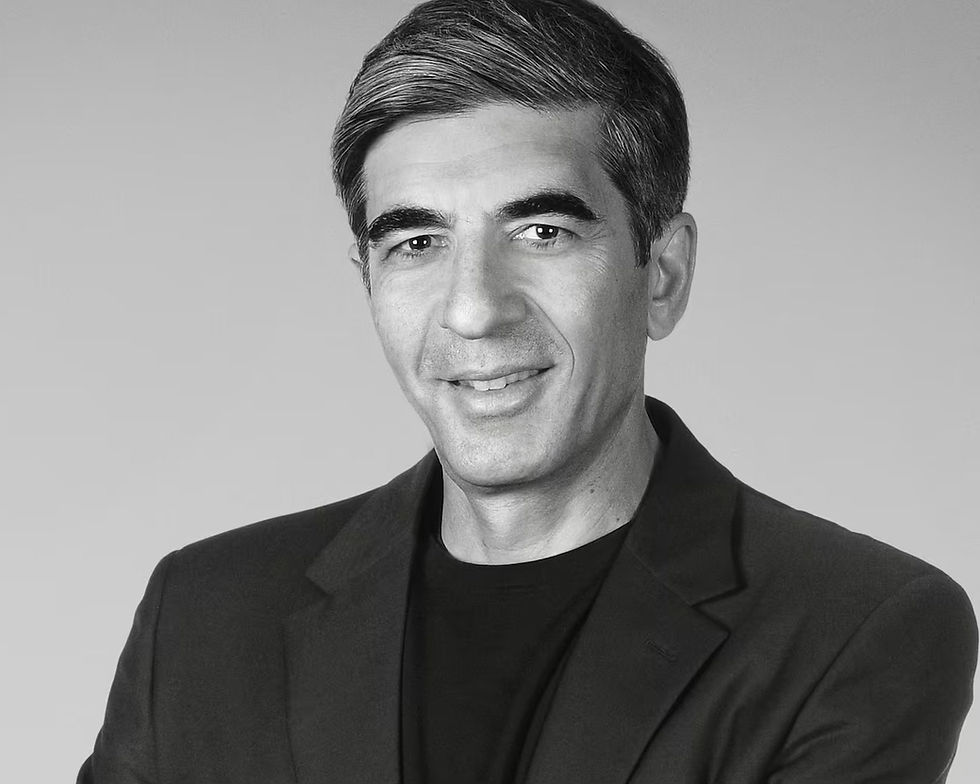
Gianfranco D'attis, Alexander McQueen's latest CEO.

It’s no great secret that Alexander McQueen has broken into 2026 in a state of protracted instability, the result of several coalescing pressures that have chipped away at both its financial performance and its cultural footing. The brand’s revenue decline - an approximate swan dive of 60% between 2022 and 2025 - purportedly reflects the departure of Creative Director Sarah Burton in 2023 and has since been compounded by clear strategic uncertainty radiating from  the top of the House. Burton’s exit severed a link to the brand’s founder, and her status as a close collaborator and friend of Lee Alexander McQueen offered genuine authenticity to long-standing clients and industry observers alike. She successfully transliterated the House’s deep and emotional intensity into commercially viable collections, and McQueen reached insurmountable levels of revenue beneath her creative leadership. While signalling a shift towards a younger demographic it may have, the appointment of Sean McGirr in 2023 and the subsequent transition has been fraught; his attempts to revitalise the brand have not yet translated into renewed demand and, when the gap between creative direction and commercial performance in fashion begin to widen, companies are faced with a decision. Kering’s, though, lies far beyond the designer’s desk.


Effective since June 3rd, Gianfranco D’Attis has been appointed CEO of Alexander McQueen. With him, D’Attis brings credentials spanning the revitalisation of many household names, including Christian Dior Couture, Prada, and Chloé,  where he fortified retail performance and whetted brand consistency across global markets. His expertise lies in rebuilding desirability - the exact point of contention within Alexander McQueen -  through disciplined brand architecture, clienteling excellence, a rigorous approach to distribution, and a genuine keen knowledge about the luxury landscape which, in all honesty, never goes amiss. The question now is not exactly whether McQueen can recover - there’ll always be devotees - but what form that recovery should take. The brand sits in a uniquely challenging position within Kering’s portfolio: it’s nowhere close to being in direct competition with Gucci or Yves Saint Laurent, golden children of the Kering family tree, yet too historically adored to be repositioned purely as a commercial label. Its value lies in its storytelling, but a seminal past alone is, unfortunately, nowhere near enough to sustain a modern luxury fashion brand.


Across Europe, luxury houses are experiencing a very sharp fall indeed. According to MarketScreener, major luxury stocks fell between 12% and 26% in early 2026, with LVMH down by 26%, Hermès by 22%, and Richemont by 17%, signalling a sector-wide retreat from the “must‑have” status luxury enjoyed post‑pandemic and conflict. There exists a falling demand across the globe from geopolitical instability and a general fatigue from the aspirational consumer, too much so; the reshuffle for Alexander McQueen lands slap-bang in the middle of a harsh environment, where even the strongest houses are struggling to maintain much momentum. Amidst identity drifts driven by constant turnover of creative directors - the most high-stakes game of musical chairs in the business - and over-expansion. Deloitte’s Global Powers of Luxury 2026 states that 66.9% of luxury executives expect growing, or at the very least stable,  revenues, but growth will come from value for money, not necessarily volume. The industry certainly hoped that a wave of new creatives amongst some of its key players - Dior, Chanel, and Gucci to name but a few - would reignite demand. But Morgan Stanley notes that creative changes have delivered limited lift, with the sector forecast to grow only 2.5% in 2026. 


Kering definitely recognises the depth of this challenge, and Alexander McQueen isn’t the only brand to receive a shiny new CEO; Isabel Marant, for example, appointing Catherine Jaquet. But it’s conveying that there’s clearly been a shift in where the possible culpability for falling sales lies. Reinvigorating a brand requires a multi-phase approach, including stabilising the brand’s identity, clarifying what it stands for in 2026, and ensuring that creative direction is either aligned with that vision. Rebuilding client trust, particularly among a loyal fanbase, is key, along with reevaluating the brand’s retail footprint. McGirr clearly has the capacity to continue at McQueen from a design point-of-view, and it’ll be interesting to see if a new model going forward leads to the reassertion of McQueen’s cultural relevance.


Comments


INTERVIEWS
RECENT POSTS

© 2023 by New Wave Magazine. Proudly created by New Wave Studios

bottom of page