top of page

Anthony Vaccarello’s Saint Laurent: A Decade Of Power, Provocation And Parisian Glamour

1 hour ago
8 min read

When Anthony Vaccarello took over Saint Laurent in April 2016, succeeding Hedi Slimane, he inherited a house whose identity had been transformed by its previous creative director and whose commercial momentum had set an imposing standard. The Belgian designer, already recognised for his sharp tailoring, provocative silhouettes and unapologetic approach to sensuality, was tasked with establishing his own vision without losing sight of one of fashion’s most influential legacies. Ten years later, following the announcement of his departure on 9 October 2026, Vaccarello leaves behind a Saint Laurent that is commercially powerful, visually unmistakable and firmly positioned within contemporary culture.


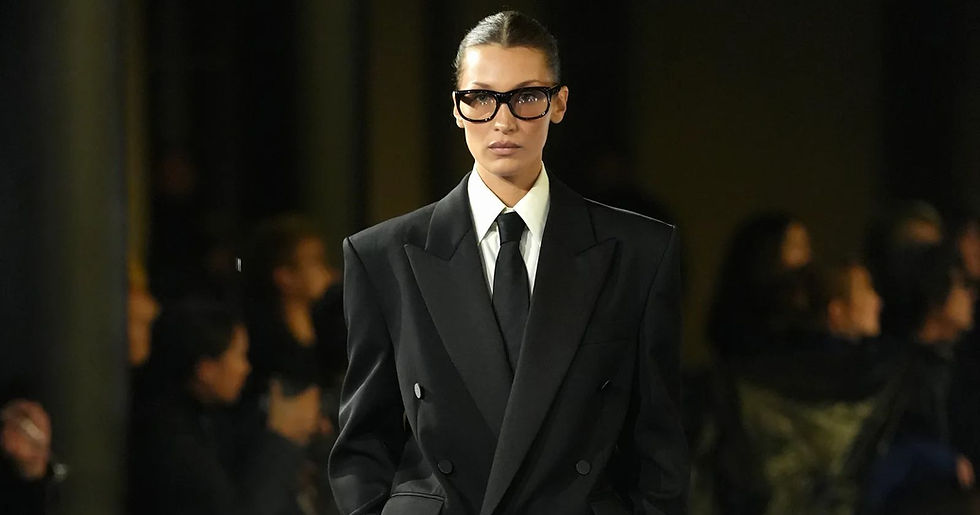
His achievement was not simply to make Saint Laurent desirable again, but to establish a coherent visual language that could operate across clothing, accessories, campaigns, celebrity dressing and spectacular runway presentations. Where Slimane had cultivated a rock-inspired universe shaped by youth culture and music, Vaccarello developed a more controlled expression of Parisian sexuality: elongated silhouettes, exposed skin, strong shoulders, leather, sheer fabrics and eveningwear that balanced restraint with exhibitionism. His Saint Laurent woman was confident, sometimes intimidating and rarely interested in dressing to appear agreeable. It was a vision that became one of the most recognisable signatures in luxury fashion.


What He Brought To The House

Vaccarello’s greatest contribution was his ability to narrow Saint Laurent’s visual identity without making it immediately unrecognisable. He understood that the house did not need an entirely new vocabulary; it needed a contemporary interpretation of the codes that had made it significant in the first place. Yves Saint Laurent had challenged conventions through Le Smoking, his women's tuxedo, the Saharienne safari jacket and the relationship between masculine tailoring and feminine dress. Vaccarello revisited these ideas through exaggerated proportions, revealing construction, high slits, transparent fabrics and a persistent tension between covered and uncovered skin. His clothes communicated power through silhouette as much as through ornament.


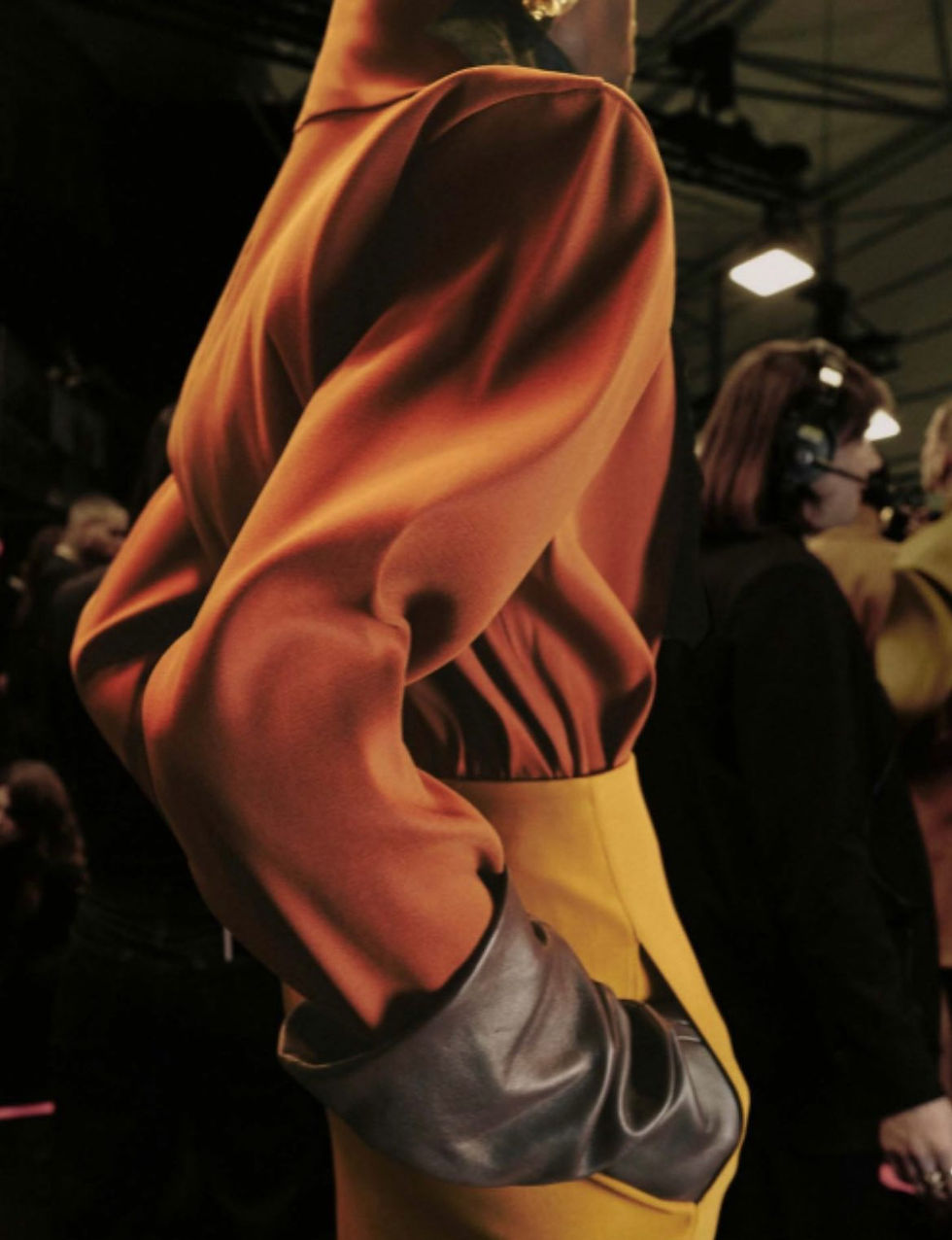
Over time, this approach became increasingly disciplined. His collections often revolved around a concentrated palette, a dominant silhouette and a handful of historical references, giving each season a distinctive identity while maintaining continuity across the decade. Black became an almost permanent foundation, accompanied by white, earthy neutrals, jewel tones and, in his final collection, gold. He also demonstrated that sensuality did not have to mean fragility: his sharp-shouldered jackets, structured coats and commanding trousers gave the Saint Laurent woman an imposing presence. The limitation was that this consistency could also become predictability, with the house returning frequently to familiar formulas of sex appeal, eveningwear and severe tailoring.


His Biggest Achievements: From A €3 Billion Business To A Cultural Institution

The commercial growth is one of the clearest measures of Vaccarello’s impact. Saint Laurent reported revenue of €3.3 billion in 2022, an increase of 31% on the previous year as reported, while recurring operating income exceeded €1 billion. The business subsequently faced a more difficult luxury market, with sales declining in 2024 and 2025. Nevertheless, Vaccarello helped establish the house as one of Kering’s most important brands, combining a recognisable runway identity with products that could reach customers beyond the front row.


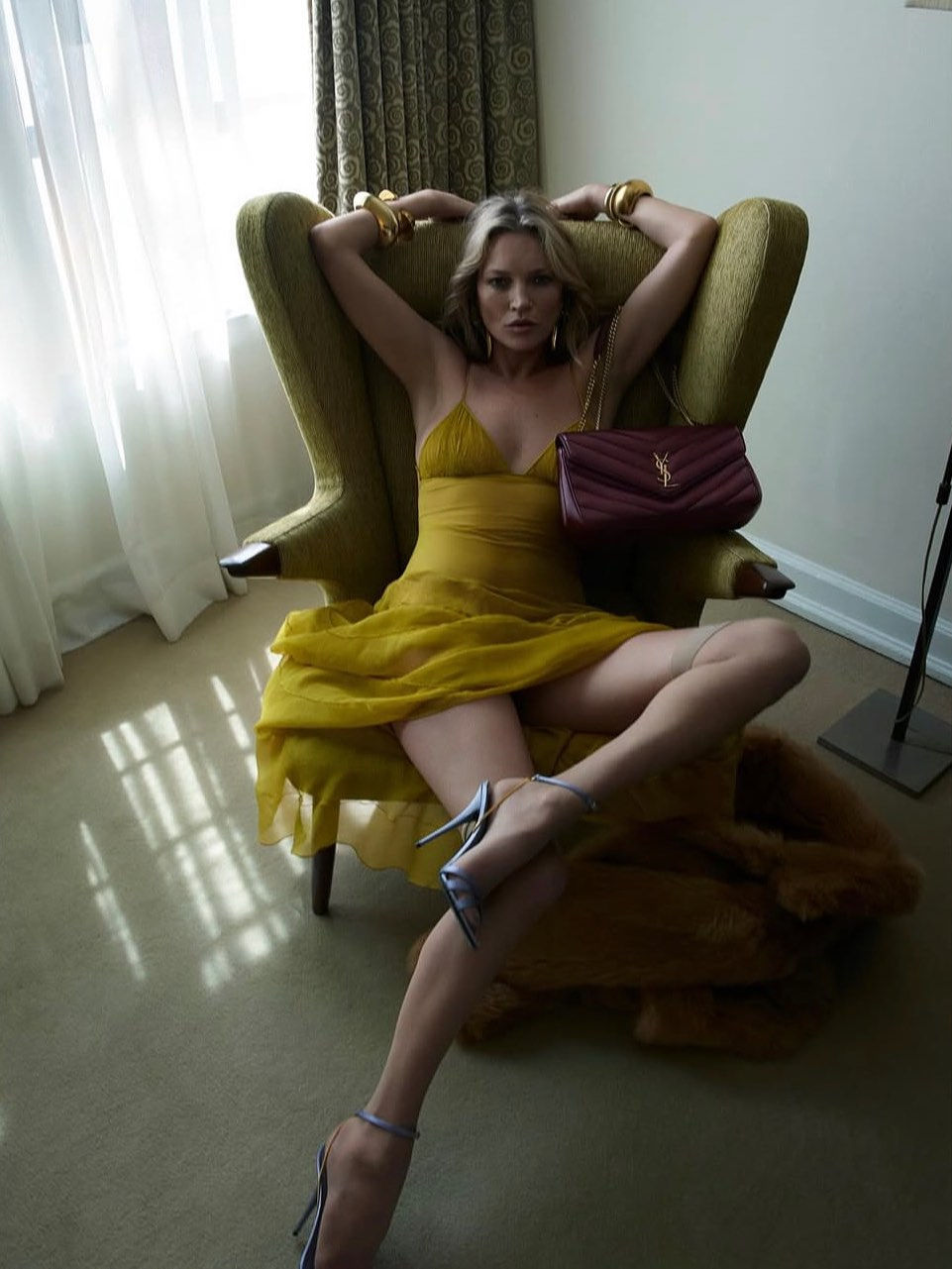
His accessories strategy was particularly significant. The Le 5 à 7 bag became one of the house’s recognisable contemporary products, while the return of the Mombasa bag connected Vaccarello’s present-day vision with the house’s Tom Ford-era history. These products demonstrated that his design language could translate into everyday luxury, not simply the theatricality of a runway show. His success lay in making the same brand codes work across different price points and occasions, from leather goods and tailoring to high-impact eveningwear.


Another achievement was expanding Saint Laurent’s presence beyond conventional fashion. In 2023, Vaccarello established Saint Laurent Productions, a film production arm that gave the house a more direct relationship with cinema. The initiative built on his earlier collaborations with filmmakers including Gaspar Noé and Pedro Almodóvar, extending the brand's cultural interests into filmmaking, costume and artistic production. It was an ambitious development for a fashion house, placing Saint Laurent in a position to contribute to the creation of culture as well as its visual representation.


Iconic Moments That Defined His Tenure


1. The 2016 Debut And The Return Of The YSL Logo


Vaccarello’s first collection reintroduced the oversized YSL monogram into the visual conversation through accessories, footwear and tights. Presented against the backdrop of the house’s new headquarters, the show established his willingness to embrace the archive while giving it an immediate contemporary presence. It was a statement of intent: the house’s heritage could be made visible without becoming a museum piece.


2. The Eiffel Tower Runways


The spectacular night-time shows beneath the Eiffel Tower became defining images of his Saint Laurent. The Spring/Summer 2018 presentation, in particular, established a powerful relationship between Parisian landmarks, fashion spectacle and the brand’s identity. Vaccarello understood that the setting could become as recognisable as the collection itself, creating imagery that travelled well beyond the fashion audience.


3. Zoë Kravitz And The Making Of A Modern Muse


Kravitz’s relationship with Vaccarello became one of the defining creative partnerships of his decade. From the iris dress she wore at the 2017 Venice Film Festival to later red-carpet appearances, her style embodied the label’s mixture of sensuality, restraint and unconventional glamour. The house eventually published a book titled Zoë, recognising a relationship that developed beyond seasonal celebrity dressing.


4. Saint Laurent Enters The World Of Cinema


His partnership with Gaspar Noé led to Lux Æterna, the 2019 film featuring Béatrice Dalle and Charlotte Gainsbourg, which screened at Cannes. The project anticipated the formal establishment of Saint Laurent Productions in 2023. By supporting filmmakers whose work carried its own artistic identity, Vaccarello extended the house’s relationship with cinema beyond dressing actors for premieres.


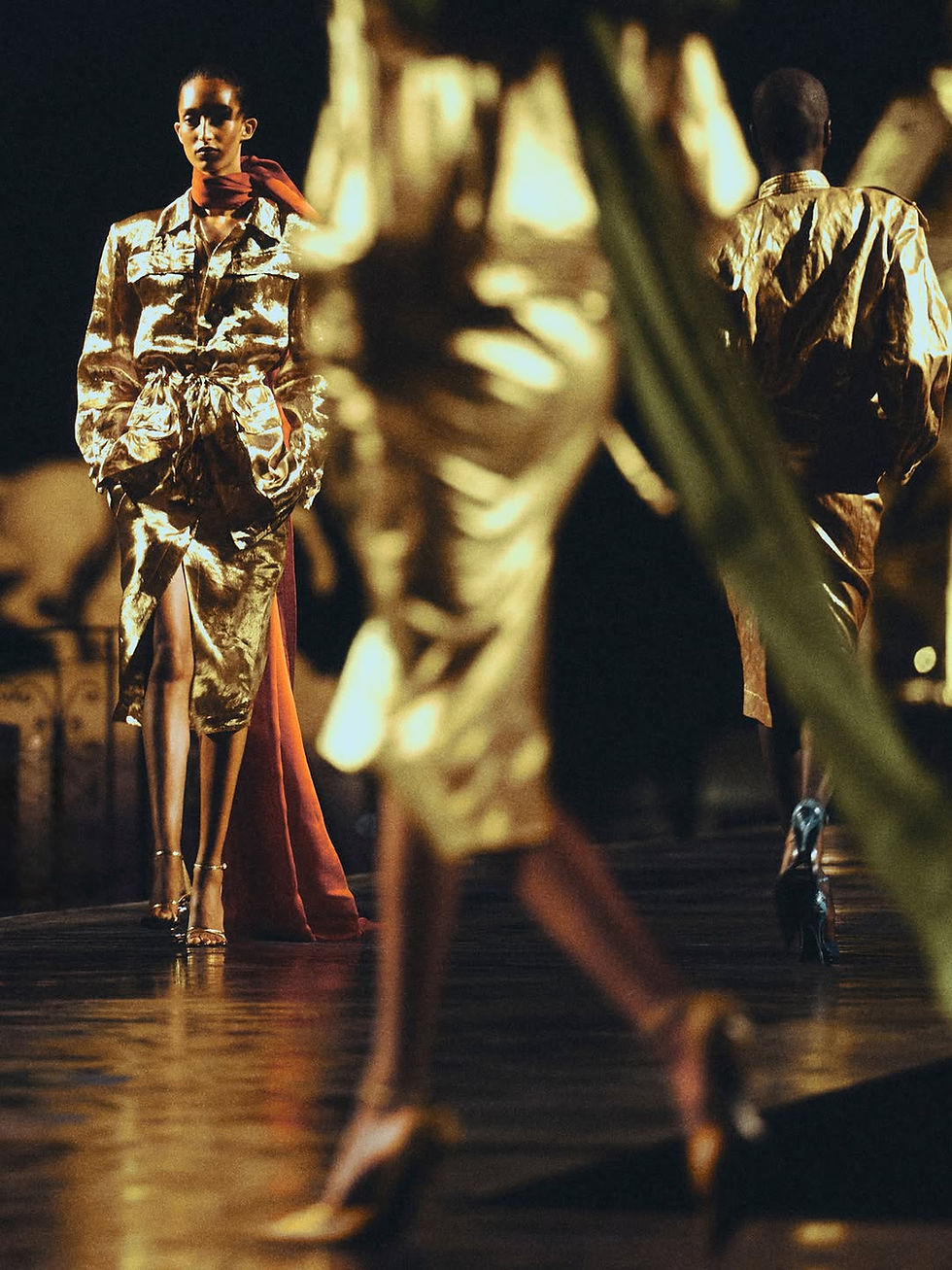
5. The Gold Finale Of Spring/Summer 2027


His final collection, presented on 29 September 2026, brought the decade to a carefully constructed conclusion. Gold looks referenced the house’s history, including Yves Saint Laurent’s Autumn/Winter 1991 Rive Gauche show, which ended with gold. Vaccarello followed his gilded procession with ten black looks, creating a visual transition from radiance to darkness. The collection was confirmed as his final show when his departure was announced on 9 October.


The Collaborators Who Shaped His Saint Laurent


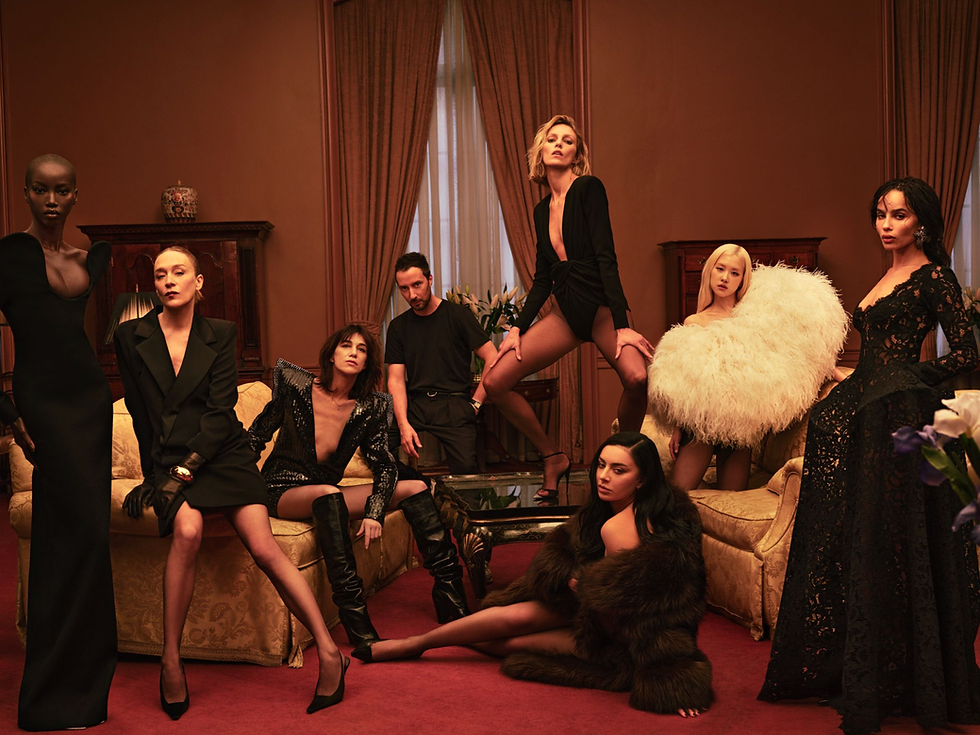
Vaccarello’s vision was reinforced by a network of recurring creative collaborators and cultural figures. His approach to casting and image-making was crucial to building continuity across the house’s campaigns and collections.


  • Zoë Kravitz — arguably his most enduring celebrity muse, embodying the house’s combination of sensuality, intelligence and understated rebellion.

  • Anja Rubik — a long-standing friend and collaborator whose connection with Vaccarello predates Saint Laurent and whose presence helped establish the designer’s early visual identity.

  • Kate Moss and Naomi Campbell — supermodels whose appearances linked the house to fashion’s established iconography.

  • Rosé — a key contemporary figure whose relationship with Saint Laurent extended its reach into global music culture.

  • David Sims, Juergen Teller, Gray Sorrenti and Inez & Vinoodh — photographers whose different approaches to portraiture, studio imagery and street photography helped give the campaigns a consistent identity.

  • Piergiorgio Del Moro — a significant casting collaborator whose work helped shape the house’s runway and campaign imagery.

  • Gaspar Noé and Pedro Almodóvar — filmmakers who helped Vaccarello build a relationship between Saint Laurent, cinema and independent artistic expression.


These relationships mattered because Vaccarello rarely approached celebrity dressing as a succession of disconnected publicity opportunities. He favoured recognisable individuals with whom the house could build an ongoing visual and cultural association. His collaborators became part of the brand’s identity, reinforcing a sense of continuity that extended beyond any single collection.


The Drawbacks: When Consistency Became Repetition

The central criticism of Vaccarello’s tenure was the narrowness of his design vocabulary. The same elements that gave Saint Laurent its unmistakable identity could make individual collections difficult to distinguish from one another: black eveningwear, sharply defined shoulders, transparent fabrics, short hemlines, leather and overtly sexual styling. His commitment to a concentrated vision was deliberate, and he has expressed satisfaction with the idea that audiences recognise the silhouette of a season. However, there is a distinction between maintaining a house identity and allowing its possibilities to become too restricted. By the later years of his tenure, the question was not whether the clothes looked like Saint Laurent, but how much further that interpretation could travel.


There was also a question of wardrobe breadth. Vaccarello was particularly effective at creating dramatic eveningwear, statement outerwear and highly desirable accessories. His work was less consistently associated with a similarly distinctive expansion of everyday womenswear. His vision of the Saint Laurent woman was often expressed through an idealised image of nocturnal glamour, leaving less room for the full range of women’s lives and dressing needs. This is an assessment of the balance of his collections, not evidence that the house lacked commercial success in other categories.


His commercial record also requires some qualification. Saint Laurent’s growth under Vaccarello was extraordinary, but the business did not continue expanding indefinitely. Revenue declines in 2024 and 2025 illustrated the limits of relying on an established brand identity in a changing luxury market. Those figures cannot be attributed solely to creative direction, given wider market conditions and changing consumer demand, but they complicate any claim that his tenure represented uninterrupted success.


Finally, Vaccarello’s Saint Laurent operated within a highly controlled aesthetic and image-making system. The spectacular venues, recognisable casting, cinematic campaigns and carefully managed visual identity were strengths, but they could also make the brand appear less open to surprise. In an industry increasingly interested in experimentation and personal expression, his discipline sometimes came at the expense of variety. The counterargument is that his refusal to chase every new trend was precisely what allowed Saint Laurent to maintain a recognisable identity across a decade.


The Legacy He Leaves Behind


Vaccarello’s legacy rests on three connected achievements: he refined Saint Laurent’s design language, strengthened its commercial position and expanded its cultural reach. He demonstrated that a heritage house could honour its founder without reproducing the past literally, and that a clear creative identity could survive for ten years in an industry where designers are increasingly expected to deliver immediate results. His work also reinforced the importance of consistency across product, casting, campaigns and the physical staging of fashion shows.


Perhaps his most significant contribution was the way he made Yves Saint Laurent’s history relevant to a new generation. Rather than treating Le Smoking, the Saharienne or the house’s tradition of provocative femininity as untouchable artefacts, he treated them as working design principles. His interpretation was narrower than the founder’s full creative range, but it was coherent enough to establish a recognisable identity of its own. In doing so, Vaccarello found a balance between authorship and stewardship that many designers inherit but few sustain for a decade.


His departure also leaves an important question for the next creative director: should Saint Laurent continue refining the language Vaccarello established, or broaden its expression while preserving the desirability he helped build? Any successor will inherit a house with considerable commercial strength, a clearly defined visual identity and a substantial cultural footprint. The challenge will be to create room for new ideas without losing the clarity that made the past decade so distinctive.


The gold-to-black finale was an appropriate closing statement. It acknowledged the house’s history while marking the end of Vaccarello’s own chapter. He did not leave Saint Laurent in search of a new identity; he left it with one firmly established. His greatest achievement was making that identity recognisable across a runway, a campaign, a handbag and a film. His greatest limitation was that the same clarity could sometimes become a boundary. Both are essential to understanding what his decade at Saint Laurent accomplished, and what it leaves for the future.

Comments


INTERVIEWS
RECENT POSTS

© 2023 by New Wave Magazine. Proudly created by New Wave Studios

bottom of page