top of page

Key Frames: 'One Day' Directed by SIOH

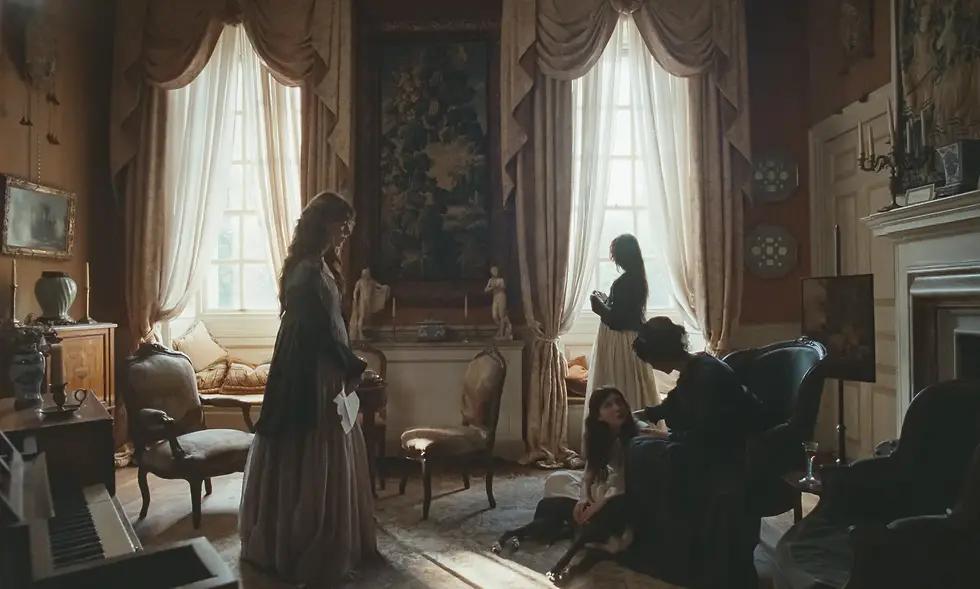
Sioh is a directing duo stemming from the friendship between models-turned-filmmakers Cherif Douamba and Ottawa Kwami. Hailing from Ivory Coast and Ghana, respectively, the two met through their modeling career and quickly bonded over similar artistic taste. It was this creative synchronicity that led them to embark on their first audiovisual project, “One Day.” The film functions more like a dream or a poem, rather than a traditional narrative. Full of evocative imagery and sincere conversations between generations, the film follows a pair of friends exploring their hometown in Ivory Coast. From a colonial statue, to a group of fishermen during high tide, we sift through the different textures of their town kaleidoscopically. They muse about life, about their future, before entering a surreal realm where they face the unknown together and with a smile. Beyond a show of the duo’s artistic sensibilities, “One Day” is a reflection of how far they’ve come as artists as well as how much farther they can go.


NET SHOT


Cherif: This shot is about African homes, a portrait of waking up in the morning and praying to god. Back in the early 2000’s we were given these nets (across Africa). Almost every household that couldn’t afford air conditioning was given some to prevent mosquitoes from getting in and infecting you with malaria. The net was actually there already when we went to the house and we thought, “Oh this is beautiful. This is a portrait from a previous time.” We really didn’t have to do too much, just added a few details around the bed. 


Ottawa: His parents are constantly arguing, and that tension weighs on him. This moment of prayer becomes his only space of peace  a quiet ritual where he can breathe, reflect, and feel safe. The mosquito net acts like a cocoon, an emotional shield between him and the chaos around him. It’s both literal protection and a metaphor for how he seeks calm and faith amid instability


FISHING


Cherif: During a high tide, the fishermen don’t go into the sea, they repair their nets. That’s where his dad is opening up to him, which is unusual for an African parent. He’s telling his son what he believes in. So in this intimate moment, the movement of the hand works as a kind of distraction to not show the emotion between them. The dad is trying to focus on something that is actually practical. 


Ottawa: It’s about a father coming to terms with the decline of his trade. The fishing business isn’t working anymore  the sea has changed, and with it, his sense of purpose. While we were filming, we saw how industrial boats poured waste into the water, poisoning the livelihood of local fishermen. That reality sits quietly in this scene. The father’s hands keep repairing the net, but it’s almost symbolic  trying to mend something that’s already breaking. Beneath it all, he just wants his son to take a different path, to focus on education, to build a future beyond the shore.


DOOR FRAME


Cherif:  In Africa, the masks are supposed to scare you, know you? But these kids are not scared of the unknown, they want to explore. So when they see the house, they are actually attracted to it. We put the point-of-view from the masquerade to give it a mysterious feel, like an observer. 


Ottawa:  Masquerades only come out when there’s a spiritual awakening or when there’s a time where they need to cleanse the village. For them, it’s about facing their fears. You want to see that point-of-view of them facing that fear, going through that experience  but also through a sense of wonder. It’s not just fear; it’s fascination, curiosity, and a deep pull toward something mysterious and spiritual.


CLOSE UP ON THE KIDS


Cherif: We placed them back to back to show how they got each other, you know. They’ll always protect each other, even in an unknown place. They’re best friends, that’s all they know. One of holding the torch while the other looks around, this signals that one of them is leading the pack and the other is making sure they’re going the right way. 


Ottawa: It’s also about them feeling safe with each other. “I have someone with me.” That sibling-like unity is what we wanted to capture in that moment. 


Cherif: We wanted to show the beauty in the way that women in Africa carry the whole family. It’s passed down through generations. You can see the old woman, she symbolises wisdom. Then there’s the one on the right who stands for acceptance. The mother with the baby is building the future, you know? Protecting the future.


Ottawa: The film is mostly about two boys, but we asked ourselves, “Who really shapes the lives of children in Africa? Who teaches boys to love, to grow into who they are?” For me, it’s always been the love of a mother  something that shaped me in ways I didn’t realize. This scene is about acknowledging that unseen strength. If we’re making a portrait for Africa, we can’t leave out the women  their voice, their tenderness, their struggles. They are the foundation, the heartbeat of it all. 


Ottawa: The beach is more of a dream scene  just two kids sitting by the shore, talking about what they want from life and from the future. We wanted something cinematically beautiful, something that feels like freedom. After the heavy conversations earlier, this becomes their release  a moment of pure joy. They run, laugh, and play, surrounded by the sound of waves. It’s filled with hope  the kind of youthful hope that dreams of flying someday. For me, it’s one of the most peaceful and poetic scenes in the film


Cherif: The beach represents an infinity perspective, in the sense that it’s endless. You never know what’s behind it. Similar to these kids dreaming of a world they have never explored. Them playing with toy planes reference that, for us as models, we spend most of our time in airplanes. When I was a kid I wanted to be a pilot but because of my struggle with mathematics I ended up studying literature instead.


Look out for more films from the director duo in the near future, follow their journey via @sioh.gram


Comments


INTERVIEWS
RECENT POSTS

© 2023 by New Wave Magazine. Proudly created by New Wave Studios

bottom of page