top of page

The Return of the Cigar as a Cultural Icon

Updated: Jun 30

How are cigars being recontextualised within contemporary fashion and pop?


For decades, the cigar has occupied a particular place within pop culture and cinematography: a symbol of power and craftsmanship, often associated with older forms of masculinity and status. Yet today, it is reappearing in a significantly different context. Its resurgence in the cultural landscape is not a coincidence but the result of elements already in motion. It reveals a shift away from restraint and hyper-curated lifestyles toward glamour, excess, and tradition. 


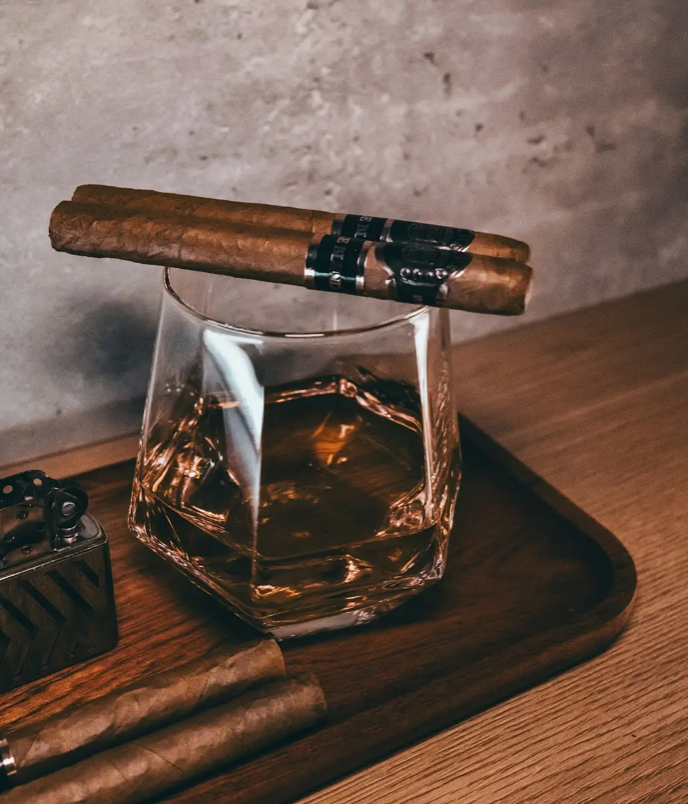
Across fashion campaigns, music videos, celebrity imagery, and red-carpet moments, the cigar has returned as a contemporary cultural symbol. In this light, brands such as Habanos S.A. and its flagship marque, Cohiba, sit at the intersection of this new narrative. No longer confined to long-associated ideas of luxury, the cigar is being reinterpreted by new generations while remaining deeply rooted in its heritage. 


Instead, what is emerging feels like a new visual language that embraces imperfection, messiness, and glamour. Within that shift, the cigar has returned as a cultural image object, less about smoking itself and more about what it visually communicates: composure, rebellion, and performance. 


This return, now gaining mainstream popularity, was initially expressed through fashion. Far from chaotic, it embraces precision and intention while maintaining a deep attention to tailoring and silhouette. Both of those worlds are increasingly moving in parallel directions, thereby contributing to the conditions that empower the cigar’s visibility in mainstream culture. 


The comeback of glamour further echoes earlier moments in fashion history, when clothing became closely tied to image-making and performance. Back in the 1980s, power dressing transformed tailoring into a symbol of authority as women entered corporate spaces long dominated by men. Those same visual codes are today reinterpreted through a nightlife aesthetic, with deliberate excess, creating an atmosphere where the cigar naturally regains cultural resonance. 


Within this evolution, houses such as Saint-Laurent, Versace, and Dolce & Gabbana, alongside their respective creative directors, began to signal a shift away from restraint toward a renewed dramatic opulence. At Saint-Laurent, Anthony Vaccarello’s spring/summer 2025 collection constructed a cinematic universe defined by dim lighting, black leather seating, and a tension between masculine and feminine codes. Sharp tailoring, oversized shoulders, and structured pant suits were contrasted with deep necklines and an edgy yet controlled sensuality. Atmospheres where the cigar naturally emerges as both an accessory and a lifestyle symbol. 


Elsewhere, Alexander McQueen, under Seán McGirr, presented its autumn/winter 2025-2026 collection as an extension of its gothic appeal and expressive tailoring. The collection emphasized material weight, rejecting polished minimalism in favor of heightened emotional and theatrical presence. 


Beyond traditional houses, designers such as Willy Chavarria have similarly redefined contemporary menswear through oversized tailoring rooted in cultural identity and attitude. His spring 2026 menswear collection explored exaggerated proportions and a sense of confidence, expanding the language of glamour into more diverse and embodied forms.  


Fashion not only reflects this turn in the itinerary but also helps reintroduce cigar imagery in pop culture. This duality is exactly what makes their connection significant. While fashion languages change from season to season, houses rooted in longstanding tradition such as Cohiba, have also begun to reassert their relevance within today’s cultural narrative. 


Pop culture also provides the perfect framework for the cigar’s reinvention, transforming it into a symbol of revival, identity, and artistic expression. Madonna offers a natural entry point to this evolution. She has long incorporated cigar imagery into her visual language of provocation and excess, often photographed with cigars, including references linked to Habanos S.A, such as Hoyo de Monterrey, reinforcing her alignment with the broader mythology of Cuban excellence and controlled extravagance. 


Her recent return to the cultural spotlight, 20 years after her first appearance at Coachella, alongside Sabrina Carpenter, reflects a wider resurgence of high glamour and theatrical pop iconography in music culture. In this sense, image-making becomes inseparable from identity. What is seen is shaped by association and cultural positioning. Sabrina Carpenter, in particular, represents a similar stylized, hyper-performative aesthetic, drawing on pin-up culture while satirically playing with notions of the male gaze and reinterpreting the narrative. 


Likewise, if people and settings have long helped shape the narrative around objects, the cigar is clearly repositioned within that visual language in House Tour. Taken from her recent album Man’s Best Friend, the bold and lavish video opens the doors to a grand mansion, where the protagonist, accompanied by two accomplices, stages a playful break-in and casually leaves with a cigar in hand. The line “Are you coming in or what?” reinforces the blend of provocation and humor that defines the aesthetic. The video ultimately participates in the cigar's imagery, reframing it through themes of allure and contemporary pop iconography. 


Beyond signaling a reinterpretation of older cultural codes, this movement reflects a broader sense of belonging and a desire to construct one's own narrative, while also expressing different aspects of one’s personality. It symbolizes more than mere indulgence and serves as a prop on the theatrical stage of life. 


Aligned with the long history of Cohiba, which celebrated its 60th anniversary earlier this year, this evolution highlights how deeply rooted heritage can continue to shape contemporary perception. These special events reinforce Cohiba’s famous reputation over time and share exclusive news with participants in a luxurious setting of gastronomy and music. Similar to its special line Cohiba 55, introduced in 2021 for its 55th anniversary. Through this lens, the cigar is not just reappearing in modern imagery but also extending a narrative carefully crafted over decades. 


Established in 1966, Cohiba remains grounded in a family of tradition and passion. Its identity is not defined by reinvention, but by continuity and an expertise that has evolved without losing its core principles. It adapts, maintains relevance, and sets the tone with precision. 


The DNA of this tradition is an iconic site where all the magic happens: the El Laguito Factory. A place like no other where tradition meets its makers, torcedores, highly skilled rollers whose mastery transforms raw tobacco into iconic cigars. The house never disappoints and takes great pride in its ingredients, factories, plantations, and culture. Lines such as Behike further extend this legacy, often positioned as the most refined expression of Cuban cigar craftsmanship. This savoir-faire has passed through generations and reflects more than just a product, contributing to the cigar's status as a cultural icon. In this regard, Cohiba bridges heritage and modern forms of cultural expression, reinforcing a sense of connection to its wide audience.


The narrative remains consistent for the brand, yet it is continually reanimated by new waves of generation who engage with and echo it through different media. 


Comments


INTERVIEWS
Mens Journal 1x1.png
RECENT POSTS
Mens Journal long.png

© 2023 by New Wave Magazine. Proudly created by New Wave Studios

bottom of page