
top of page

Sound Check and Safety Check: Why Venues Trust Coast2Coast First Aid Training

32 minutes ago
7 min read

Every show has its rituals. The soundperson taps the mics. The drummer checks the kick. Someone says "one-two" into a monitor while the room still smells like last night's set. But there's another check that rarely makes the list, and it should: the safety check. A crew with Red Cross First Aid training can handle the one part of the night nobody rehearses, when the energy on the floor turns into a real emergency. In a packed room, that readiness is the difference between a scary moment and a tragedy.

Halifax knows live music. From sweaty basement bills to summer festivals and the churn of touring bands rolling through town, this is a city that shows up for a show. And the better the scene gets, the more it's worth talking about what happens when something goes wrong in the crowd.

What actually goes wrong at a gig?

Most nights, nothing. But over a year of shows, the odds add up, and the problems are more predictable than you'd think.

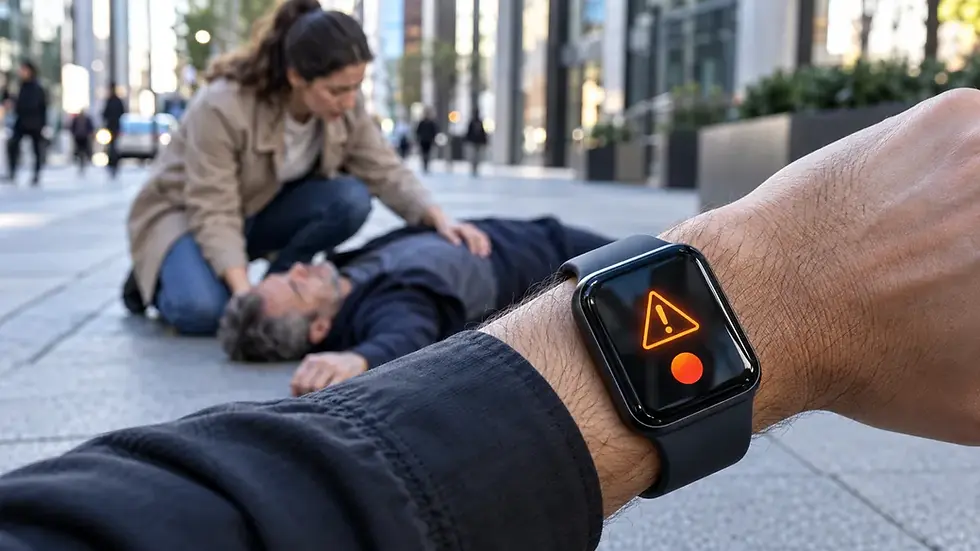
Someone's heart stops. It's rare, but cardiac arrest doesn't check your age or your wristband. A fit 30-year-old can go down. When they do, the clock starts immediately, and no venue is close enough to a hospital to wait it out.

The heat gets dangerous. Pack a few hundred bodies into a low-ceilinged room, add lights and a mosh pit, and the temperature climbs fast. Dehydration, dizziness, and heat exhaustion creep up on people who are too locked in to notice they're in trouble.

People faint. Standing still for hours, not enough water, maybe one too many drinks, and someone drops. In a dense crowd, a fainting person can't even fall properly, which makes it scarier for everyone around them.

The pit does what the pit does. Twisted ankles, split lips, a nosebleed, the occasional harder knock. Usually minor. Occasionally not.

None of this means shows are dangerous. It means a room full of people is still a room full of people, and someone should know what to do.

Why does bystander CPR matter so much?

Here's the part worth tattooing on the back of every stage pass. When a heart stops, survival is a race, and the people already in the room are the ones who can win it.

In Canada, around 60,000 cardiac arrests happen outside a hospital every year, and only about 1 in 10 people pull through. That number is brutal. But it isn't fixed.

Fast action from a bystander changes the math. CPR combined with an AED can double someone's chance of survival. And every minute that ticks by without CPR or a shock drops their odds by roughly 7 to 10 percent. Paramedics are good and they're quick, but "quick" across a busy city still isn't quick enough on its own. The hands that matter most are the ones standing ten feet away when it happens.

Think about that in venue terms. The bartender, the merch person, the sound tech, the door staff. Any one of them, trained, becomes the reason someone goes home.

How do you even get to someone in a packed room?

This is the practical bit the movies skip. Knowing CPR is one thing. Reaching the person through a wall of fans mid-set is another.

That's why a plan beats a hero every time. Venues and crews that take this seriously tend to work out a few things in advance:

●    Cut the music, hit the lights. The band stops, the house lights come up, and suddenly the crowd can see what's happening and part to make room.

●       Clear a lane. Security and staff open a straight path from the incident to the nearest exit and to the AED.

●        Know where the AED lives. Not "somewhere backstage." The exact spot, known to everyone on shift, so no one's hunting for it while seconds burn.

●       Assign the call. One person phones for help and meets responders at the door to lead them in. A big building is useless to paramedics who can't find the right room.

Trained staff don't just know the medical steps. They know the choreography of getting help to a body in a crowd, calmly, without the whole night tipping into chaos.

What's in it for bands, venues, and crews?

Plenty, and not only the obvious. Yes, the main point is that someone might live who otherwise wouldn't. That's reason enough. But there's more going on.

A venue that's visibly ready is a venue people trust. Artists notice. Agents notice. Touring acts talk to each other, and "they looked after us" travels. When a promoter knows the room has trained hands and a known AED, booking there feels different.

It settles the crew, too. The people working the floor spend less of the night low-key dreading the worst, because they'd actually know what to do. That calm radiates outward. A confident door person and a steady bartender set the tone for the whole room.

And for touring musicians, the skills travel with you. A guitarist who can run compressions in a green room in another city is carrying something no amp can replace. If your band or your venue wants to get everyone on the same page, it's worth looking into what Coast2Coast First Aid offers for crews who'd rather be ready than lucky.

What does a ready room actually feel like?

There's a quiet difference between a venue that's hoping for the best and one that's prepared for the worst. You can't always see it, but you can feel it.

In a ready room, the staff know their roles before anyone says a word. The AED isn't a mystery box collecting dust; it's checked, charged, and in a spot everyone can point to with their eyes closed. The crew has had the five-minute conversation about who does what if someone goes down, so nobody's improvising when adrenaline hits.

None of that dampens the night. If anything, it frees everyone up to enjoy it. When the people running the show aren't secretly carrying a knot of dread about what they'd do in an emergency, that ease flows out to the floor. Good energy and good preparation aren't opposites. They feed each other.

And here's the thing about the scene itself. Halifax's music community is tight. Word travels fast about who treats people well, and that reputation is built on nights that go right, including the near-misses nobody outside the room ever hears about. Being ready is part of looking after your own.

Who on the team should actually learn this?

Short answer: more people than you'd guess. You don't want the one trained person to be off that night, or stuck behind the bar when the trouble's at the back.

●       Door and security staff. They're closest to the crowd and usually first to spot a problem.

●       Bartenders and floor staff. They move through the room all night and clock the people who've stopped looking okay.

●       Sound and stage crew. They control the one thing that clears a room fast: the music and the lights.

●       Touring musicians themselves. You're in a different venue every night, and the skill comes with you wherever the tour goes.

Spread the knowledge around and you build real coverage, not a single point of failure.

Isn't getting trained a hassle on a touring schedule?

It used to be more of one. Not so much now.

A lot of training runs on blended learning these days. You knock out the theory online, around load-ins and drives and whatever your week actually looks like, then come in for a single short hands-on session to practise the real thing on a mannequin. CPR and AED training covers adults, children, and infants, so you're ready for a festival crowd that spans every age.

That flexibility matters for people whose schedules are a mess by design. You're not blocking out a full week. You're fitting the theory into the gaps and showing up once to get your hands dirty. For a working crew, that's doable.

Picture it on a real night. Someone goes down near the front. The music cuts, the lights come up, a trained staffer starts compressions while another grabs the AED everyone knows the location of, and a third is already outside flagging the ambulance. No panic, no fumbling. Just a room that was ready. That's not luck. That's a safety check that happened long before the doors opened.

So next time you're at a show, or playing one, give a quiet thought to the check nobody claps for. The sound matters. Safety matters more.

If you are looking for first aid and CPR training in the Halifax area or surrounding communities, you may reach out to Coast2Coast First Aid & Aquatics in that area.

Frequently Asked Questions

Q: Why should venue staff learn CPR if paramedics are only minutes away?

A: Because minutes are exactly the problem. Survival from cardiac arrest drops by roughly 7 to 10 percent for every minute without CPR or a shock. Staff already in the room can start help immediately, long before responders arrive, which is often what decides the outcome.

Q: Are AEDs really safe for untrained people to use?

A: They're built for it. An AED gives spoken instructions step by step and only delivers a shock if it detects one is needed. Training makes you faster and calmer with it, but the device itself is designed so a bystander can't easily go wrong.

Q: What's the most common emergency at live shows?

A: Heat-related issues and fainting top the list, usually from crowded rooms, long sets, and not enough water. Most are minor and resolve with fresh air and fluids, but trained staff can spot the ones that are turning serious before they escalate.

Q: Can a whole crew or band get trained together?

A: Yes, and it's a smart move. Training as a group means everyone shares the same plan for cutting the music, clearing a path, and finding the AED. Blended learning lets each person finish the online theory on their own time before one shared hands-on session.

Q: How long does certification last?

A: First aid and CPR certifications generally stay valid for a few years before a refresher is needed. A short top-up course keeps your skills sharp, which is worth it for anyone working a steady run of shows.


Comments


INTERVIEWS
RECENT POSTS

© 2023 by New Wave Magazine. Proudly created by New Wave Studios

bottom of page