top of page

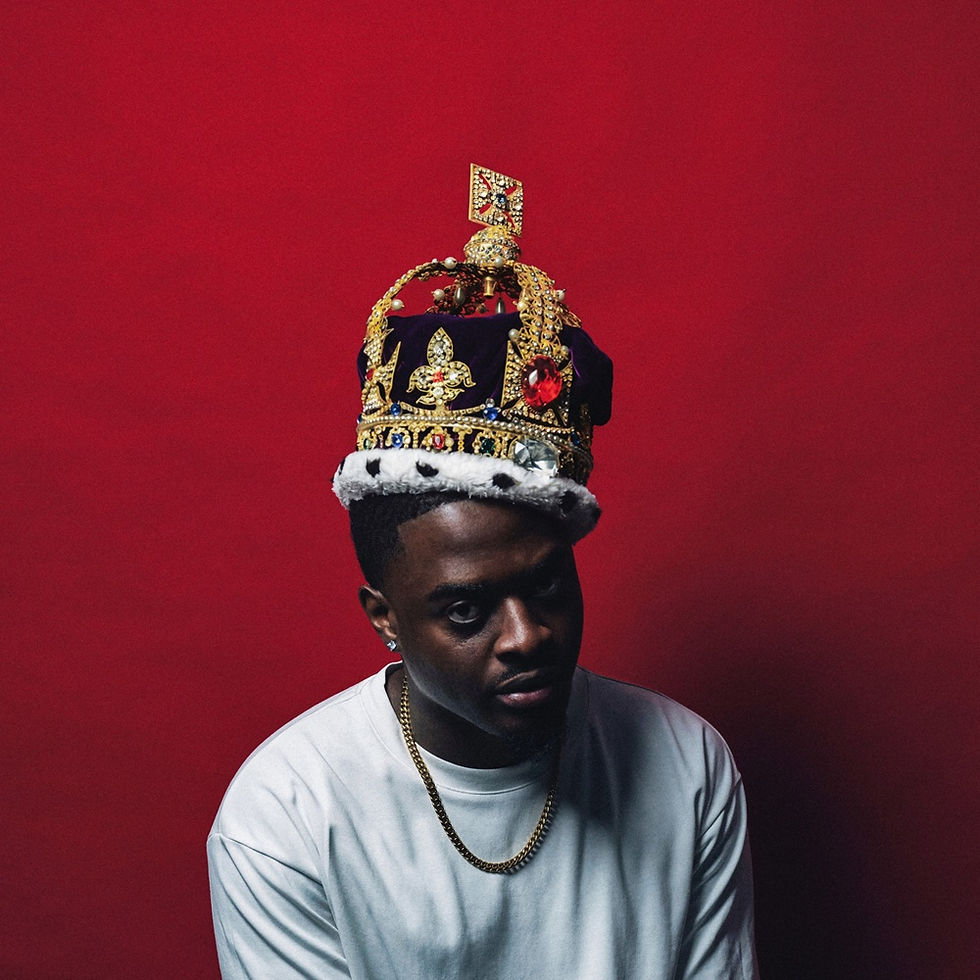
Get to Know: Kenny Mason


Kenny Mason has never seemed particularly interested in staying in one lane. His music is experimental, moving freely between hip-hop, rock, punk and alternative, but for him, the genre labels are secondary to the feeling he is trying to create. 

After taking the BULLDAWG world from North America to All Points East, Mason has been reconnecting with UK audiences, from his first Manchester show to a return to London after four years away. 

For Mason, touring is about more than simply recreating the music onstage. “It's for people to come together almost like a church gathering to enjoy the world we made.” 

Rather than approaching each song with a predetermined sound in mind, Mason allows the emotion to dictate the direction. “I don't approach songs by genre,” he explains. “It's really just whatever the thought or feeling is inspiring and then the actual sonic elements I feel like are what matches the emotion.” 

That fluidity isn't necessarily a calculated attempt to appear different. Mason describes it as an extension of who he has always been. He understands why certain sounds appeal to a mass audience, but believes the most important part is finding a way to make those elements his own. “I always knew that what made me me was special,” he says, explaining that his music allows him to balance what people already recognise with the message he wants to deliver. 

This instinct to absorb different sounds began at home. Growing up in Atlanta, music was less of a hobby and more of a daily ritual. His father would come home from work and play music as part of his routine, introducing him to artists including Tupac, Hot Boys and Lil Wayne, whilst his grandmother opened the door to an entirely different musical world of soul, R&B and psychedelia. “My household specifically was kind of like very, very, very music centric,” he recalls. 

That breadth of influence gave Mason not only a varied taste in music but also taught him to understand the relationship between sound and culture. 

Watching Atlanta's musical landscape evolve and unfold around him, he became conscious of the way particular sounds could represent an entire movement. “I can understand that this is a movement that's happening in the city,” he says. As a child, he watched the emergence of the Snap era and Trap music, simultaneously learning to recognise the cultural forces behind the sounds as much as the music itself. 

That cultural awareness has followed Mason into his own creative process, although he is careful not to define himself by any one genre. He sees rap, rock and everything in between as different languages available to him depending on what he wants to communicate. “I just look at genre as a tool to create this feeling,” he says. “I'm a rap artist when I need to be and I'm a rock artist when I need to be.”

This approach also changes how he thinks about rap itself. Rather than viewing it as a competition where artists can be ranked against one another, he sees it as something closer to a discipline. “It's not a sport because we would have the best,” he laughs. “Nah, it's an art. It's a practice. A discipline.” 

Interestingly, the freedom he now finds when moving between genres is something he also associates with his earliest recordings. Looking back, he can hear the foundations of the artist he would eventually become, despite those early songs being created during a period of uncertainty. “When I listen back then, I can hear like remnants of who I became,” he says. 

This, however, gave his music an honesty that he sometimes finds himself trying to reclaim. Before there were fans, expectations or pressure, Mason could simply make music without worrying about how it would be received. “The uncertainty that I had back then made the music sound more free,” he reflects. The recordings may have been rough and unpolished, but they were also “Free of so many expectations.” Now, he occasionally returns to those songs in search of something he feels can be harder to access with success: “Sometimes I listen back so I can borrow that.” 

That doesn't mean he romanticises his earlier self. If anything, he is conscious of how much he has grown, both technically and mentally. He describes becoming a better rapper and performer, but perhaps more importantly, he has learned how to understand when a song actually needs him to prove himself and when it doesn't. “When I was younger, I just wanted to prove myself,” he says. “I don't need that.” 

That shift has given him a different kind of confidence. Rather than sacrificing the song to demonstrate what he can do, he has learned to communicate his ability more subtly. “There's a way where I can get that across without looking like I'm trying hard or like I need validation,” he explains. His development isn't just about technical skill, then; it is about knowing when to use it. 

By the time Mason began developing BULLDAWG, that growing sense of intentionality had become central to his creative process. He had originally planned a completely different album in early 2024, but eventually realised the concept wasn't right for the moment. Instead, an entirely new world began to take shape: a character living in a junkyard, which became a metaphor for the pressures facing the modern artist in an age where visibility can influence how art is valued. 

Unlike his previous work, Mason had the world of the project mapped out before he had recorded a single song. “The idea for the world was all figured out,” he says. He knew what he wanted to talk about, the feelings he wanted to express and the message he wanted the project to carry. That clarity made the recording process feel less like constructing an album and more like fulfilling something that was already waiting to exist. 

“This album had a mind of its own,” he says. “It saved my life.” 

At the heart of BULLDAWG is a question of identity: How do you maintain a sense of self when so much of an artist's value can feel tied to visibility, success and outside perception?

For Mason, knowing who you are has to come before anything else. 

“I feel like that's the meat and potatoes of anybody that's creating anything,” he says. “Your identity needs to be so solid because there are going to be so many other things that are uncertain for you that you need to have your sense of self before you venture out into this practice.” 

That idea becomes particularly important in an industry where an artist's desire to succeed can easily become something others can exploit. “Your desire to be something or someone will almost always be used against you. Always,” he says. 

At its core, BULLDAWG is a record about holding onto yourself in a world constantly asking you to become something else. 

Through its junkyard setting, genre-blurring production and questions of ambition, Kenny Mason turns the album into something bigger than a statement about his career and as he continues to take that world from stage to stage, that core message remains at the centre of it: Knowing who you are before deciding who you want to become.


Comments


INTERVIEWS
RECENT POSTS

© 2023 by New Wave Magazine. Proudly created by New Wave Studios

bottom of page