top of page

Fallout’s Frances Turner and the Art of Remaining Human

The world of Fallout is a ruined future enveloped in the optimism of the past; a place of smiling mascots and nuclear promises. It’s vast, strange, and often brutal.


New Wave sits down with Frances Turner, Fallout’s Barb Howard, to talk career, complexity, conscience, and how to remain human inside systems designed to flatten us.


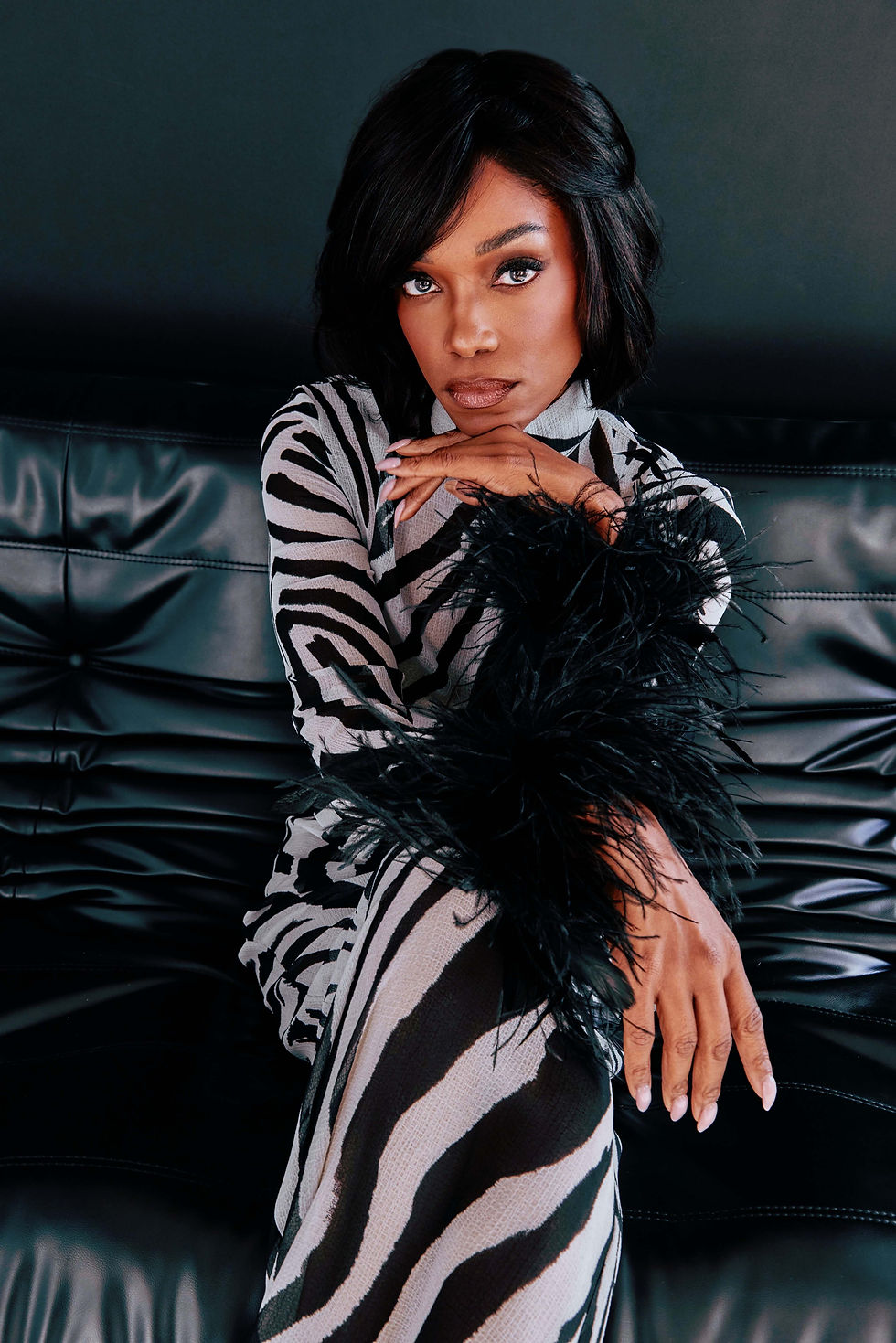
Photographer: Ruben Chamorro. Styling: DaVian Lain. Hair: Takisha Sturdivant-Drew. Makeup: Shyanna Lundi.

We speak early in the year, in that strange, reflective temporal pocket, and Turner tells me she feels “refreshed” and “hopeful”. Not because the world necessarily makes room for this, but because for her, hope is a choice. We casually consume cruelty through our screens and are becoming increasingly disconnected from one another. She speaks with passion and clarity about what she feels is being lost: our sense of shared humanity.


The conversation drifts productively through the failures of modern media, the erosion of discernment, and the danger of opinions with the critical thought sold separately. Turner describes herself as someone who keeps her “eyes on her own paper.” She is unimpressed by performative relevance. What grounds her, she says, is who she is.


Frances has built a career playing women with what I describe to her as “calm authority”; characters who are composed, observant, typically underestimated. She smiles at the phrasing. There is, she reflects, a clear throughline in the roles she’s drawn to: women who are complex, and multidimensional, with deeply rich inner worlds.


Photographer: Ruben Chamorro. Styling: DaVian Lain. Hair: Takisha Sturdivant-Drew. Makeup: Shyanna Lundi.

“We are many things at one time. Not just strong or soft. Not just mother or professional. Not just moral or compromised.”


In Fallout, Turner plays Barb Howard, initially introduced as a pre-war wife and mother, embedded comfortably within the routines of mid-century American normality. But as the series develops, revelations about Barb’s role as a Vault-Tec executive slowly destabilise that image. Her proximity to power, her access to information, and the ethical compromises she makes along the way complicate our relationship with her character.


Turner resists categorising Barb as either hero or villain. Instead, she situates her within corporate and political systems.


“There isn’t a person walking this earth who isn’t navigating some kind of system,” she says.


Barb’s conflict, Turner suggests, is not extraordinary. The question Fallout poses is not whether Barb is good or bad, but what any of us would do with the same limited time, partial knowledge, institutional pressure, and, of course, so much to lose. Judgement is easy in theory; reality rarely affords us such moral clarity.


What Frances does insist upon is making room for complexity, especially for women. 


Photographer: Ruben Chamorro. Styling: DaVian Lain. Hair: Takisha Sturdivant-Drew. Makeup: Shyanna Lundi.

The most compelling characters, we agree, are the ones who refuse to compress themselves in the name of palatability; the ones who invite room for contradiction, and divided opinion.


“Most villains don’t believe they’re villains.”


Off-screen, Frances finds joy in music. She collects vinyl: jazz inherited from her late father, Motown, R&B classics, Black film soundtracks. She speaks sweetly about the spirituality of listening: the weight of the record, the act of turning it over, its demand for total presence. It slows her down; it keeps her connected; it makes her feel whole.


Before acting, Turner built a successful career as a corporate attorney. A graduate of Cornell University and Georgetown University Law Center, she practised law at a major firm before transitioning into acting.


It is clear she is as multifaceted off-screen as she is on.

As she says, “A three-dimensional woman can exist in any genre.”


Fallout is expansive in its world-building, but Turner’s Barb proves that the series is also committed to discipline in its character work. The show’s nature allows her a wide canvas, but she uses it prudently, choosing to emphasise the humanity that underscores all the peculiarities of this strange world, and trusting the audience to read between the lines and form their own conclusions.


Photographer: Ruben Chamorro. Styling: DaVian Lain. Hair: Takisha Sturdivant-Drew. Makeup: Shyanna Lundi.

Frances Turner has a rare presence. She’s compelling, intellectually grounded, and emotionally generous. Her commitment to developing her own interiority makes her mesmerising not only in performance, but in how she shows up in the world.


We get the impression that she is only just getting started.


Watch Frances Turner in Fallout, now streaming on Prime Video.


Comments


INTERVIEWS
RECENT POSTS

© 2023 by New Wave Magazine. Proudly created by New Wave Studios

bottom of page