Behind the Bookings: How Anti-Agency Rewrote the Rules of Casting
top of page

Behind the Bookings: How Anti-Agency Rewrote the Rules of Casting

Various faces of different models showing the diversity of Anti-Agency's models
Faces from the Anti-Agency board. Image Credit: Yasmin Thompson-Lamont, Anti-Agency.

Whilst fashion prides itself on progress, the hierarchies it clings to feel all too familiar. Anti-Agency, however, has been re-shaping what casting looks like from the inside out. Known for championing “real people” over polished archetypes, the agency’s impact is felt long before an image of one of their models reaches the page. In this behind-the-scenes conversation, New Wave spoke to Anti bookers Yasmin Thompson-Lamont and Lino Linares Parra about the invisible labour of bookings and the ethics of representation, and why these matter just as much as any final image.


A selfie of a woman lying in bed, she is one of the bookers
Yasmin Thompson-Lamont, booker at Anti-Agency.  Image Credit: Yasmin Thompson-Lamont, Anti-Agency.
A man on his laptop, he is one of the bookers
Lino Linares Parra at Work for Anti-Agency. Image Credit: Yasmin Thompson-Lamont, Anti-Agency.

For readers who may not know Anti-Agency, how would you describe what makes Anti fundamentally different from a traditional modelling agency?

For me, what makes Anti different is that we don’t treat “model” as a separate, perfect category of person. The agency was built around real people like musicians, artists, students, and skaters, with much of our casting coming from real communities and subcultures. Lino and I book work that grows out of who these people actually are, not what they’re supposed to be in a fixed idea of beauty. We’re also very collaborative with our models, talking to them about what they want, what feels right, and which brands or stories make sense for their career. So, rather than sending over a “look’’ when we’re booking editorials or campaigns, we’re advocating for people we know really well, which is why images of our models feel so genuine.


In telling this story from a ‘behind the scenes’ perspective, why do you think the role of the bookings team is so often overlooked?

I think bookings are overlooked because our job is designed to be invisible when it works. People see the model, the brand and the final image, not the weeks of emails, negotiations, problem-solving and care that got them there. The spotlight usually goes to photographers, stylists or casting, while agents stay in the background. For Lino and me, it feels important to highlight this now because so many decisions about who gets seen, and how, are made at the booking desk. We’re the ones pushing for certain faces, balancing big opportunities with people’s boundaries, and shaping the campaigns that define how our agency and our talent show up in the industry.


What role does trust and personal relationship play between bookers and talent at Anti-Agency?

It’s kind of the whole point of how we work. At Anti, nothing really happens without trust between us and the models. When a job comes in, Lino and I will always talk through the brief, the client, and how it will be used, with the person first. We are also always very clear that they never have to say yes to something they don’t feel good about. We’d much rather lose a booking than push someone into a situation that doesn’t sit right with them. Our models know we’re on their side and we know they’ll be honest with us about what they’re up for, this keeps the relationship working long term. 


For readers unfamiliar with this world, can you walk us briefly through how a casting decision is made from start to finish, from initial brief to final talent selection?

It usually starts with a brief landing in our inbox. It can be anything from a super-polished deck to “we want someone cool and real… help”. From there, Lino and I go through the board and pull the people who really fit the vibe, then build a package with digitals, videos and key work so the client can actually imagine them in the story. The client comes back with the names they’re excited about, and that’s when we go to the model. We’ll then talk to them properly about the brand, the concept, and how the final images are likely to sit in their book, plus all the practical stuff like fee, usage and travel. The question is always: would you be proud of having this job in your portfolio, rather than “it’s work, so you should say yes’’. Depending on the project, there might be self-tapes, live castings, or Zooms before the client locks someone in. By the time a model is confirmed, there’s already been a lot of work from us deciding who gets put forward, matching the right project with the right person and vice-versa. 


How does Anti-Agency approach model strategy differently, particularly when it comes to long-term career development rather than one-off bookings?

I think the big difference is that we don’t see bookings as isolated moments, we see them as part of a longer storyline. When Lino and I are building someone’s strategy, we’re asking: what does their path look like over the next few seasons, and does this job move them in that direction? We don’t say yes to every option that comes in. With someone like Vakare, for example, we’re not trying to book her on everything and burn out her image. We’ll turn down editorials, covers, and even big-money jobs if we feel they don’t sit right with where she’s heading long term. We’re always looking at how each booking fits into the bigger picture, so that in a few years, you’ll be able to look at their career and see a clear, considered thread rather than a random list of jobs.


How do conversations around identity and diversity shape the way you think about casting beyond surface-level representation?

It’s a huge part of how we think about casting now, because for most of our models, identity isn’t theoretical. So, when a brief mentions diversity, Lino and I are always asking what that actually means: is this a job that genuinely makes space for someone’s race, gender, body, culture or is it just using those things as an aesthetic? We carry these questions into every booking and we’ll push for certain faces only if the diversity is meaningful, saying no if something feels tokenistic. A lot of the real work happens in conversation with the talent where they’ll tell us what they're comfortable with and which brands or topics are off-limits to them. This idea of ‘beyond surface-level representation’ for us ultimately means checking that the final image, the team, and the brief all line up with who that person actually is. 


In your experience, how has the fashion and media industry’s understanding of representation evolved, and where do you think it still falls short?

I think the industry has definitely moved on from the days where a line-up could be completely white and sample-sized. You see more variety in race, size, and gender now, and there’s at least an awareness that representation is something brands can’t ignore anymore. But a lot of this still sits at surface level. You can’t diversify a cast without diversifying who’s in the room making decisions, or how people are treated on set, or who’s getting paid what. That’s where it still falls short for us. We’ll get briefs that talk about inclusion, but the usages, the rates, or the story being told don’t match that language at all. Real progress has to look like a more consistent, almost meticulous process of change, not a “diversity moment”, with better casting choices, conditions, and people wielding power behind the scenes. Saying that, Anti used to be the only exception in the industry, we were quite literally ‘anti’ the norm. It’s been nice to see similar agencies pop up, and traditional agencies taking more chances on untraditional faces, as well as clients actually wanting something else. Whilst this is still only at the optics stage, and is sometimes slightly contradictory, I’m hopeful that representation is still being nurtured or is at least still relevant even in the fashion industry which is saturated with digital competitiveness and nepotism. 


How do you balance commercial demands from clients with Anti’s commitment to authenticity and cultural integrity, and is this something that you actively consider?

It’s definitely something we actively think about, because that tension is basically our whole job. On one side you have clients with budgets, deadlines and very specific needs; on the other you have real people with boundaries, politics and lives outside of fashion. This means we don’t treat every brief as automatically ‘worth it’, and we look into how the final images are likely to feel, speaking to the model before we commit. This also involves making compromises with clients’ commercial demands, adjusting usage and pushing for better rates to shape the casting from our end. Of course, it can sometimes end in us saying: “This isn’t right for you” or “This doesn’t feel like Anti,” even if the money is good. We’re not pretending we’re outside of the commercial system as we still have to keep the agency running, but we protect the line where the work our models do is aligned with who they are.


When casting for covers or major campaigns, what does casting “real people” actually mean in practice at ‘Anti’?

For us, “real people” casting is about building big moments around who the model actually is, not them looking a bit raw and then being treated like a traditional model. When Lino and I are working on covers or campaigns, we’re thinking about the person’s life and energy as much as their face - what they do outside of modelling, what feels honest for them. In practice, that means pulling from real scenes and communities and checking that the brief makes sense for that person, not just that they’ll photograph well. The job has to work for the client, but it also has to make sense for the person whose image is going to be everywhere.


Are there any recent campaigns, covers or moments that you feel truly reflect Anti-Agency’s ethos and approach to casting?

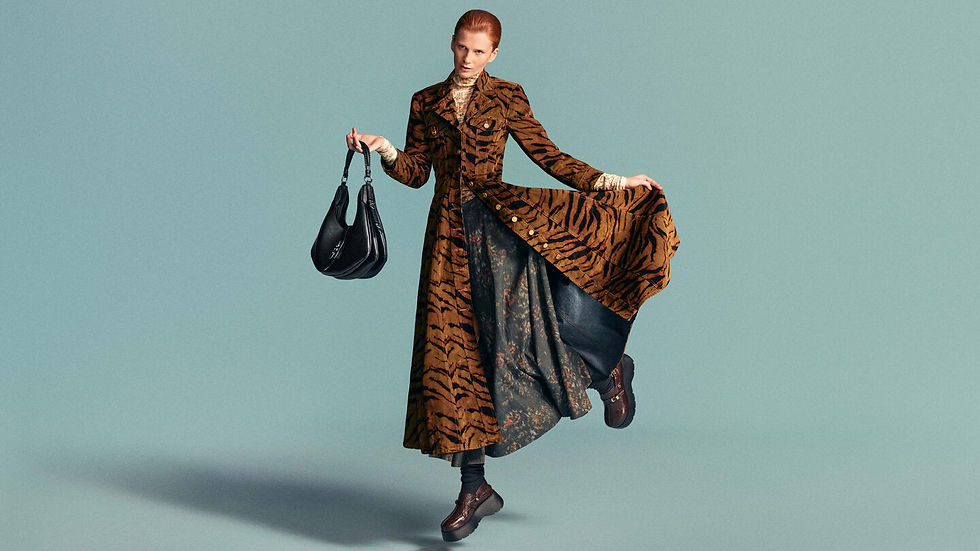
One really memorable moment that sums it up for me is the British Vogue June 2022 Pride cover I booked for Sheerah. I’d found her the week before and decided to pitch her to Vogue as someone who is genuinely active in the LGBTQ+ community and already doing the work offline. Vogue took an interest, and she ended up on the cover as her first-ever job. That felt very Anti: taking a huge platform and using it to amplify a real person and their politics, not just a look. Another example is Tommy Blue for the Adidas Originals campaign last year, where they were looking for an effortlessly cool mover and an  upcoming musician as the hero. I think that really comes through in the final film and imagery, and it’s not only rewarding to see but it completely emulates what we’re trying to achieve here. On Lino’s side, he booked Charlie Osbourne for a Ganni campaign that was focused on musicians using their music as a form of self-expression. That brief, however, was super specific as they wanted people who had a real voice and presence in their own scenes. Lino knew Charlie’s identity is tied up in her music and performance, and you can feel that when you look at the campaign. It looks like Charlie first and a Ganni model second. That’s a very Anti way of working I think. We lead with the person and let the brand sit around them, not the other way round, people know what we stand for and they come to us precisely because of that. 


A woman posing for a magazine cover
Sheerah Ravindren for Vogue’s Pride Cover 2022. Image Credit: Yasmin Thompson-Lamont, Anti-Agency.
A man modelling, he is taking off his jacket
Tommy Blue for Adidas Originals. Image Credit: Yasmin Thompson-Lamont, Anti-Agency.

A woman posing with a handbag and a long jacket
Charlie Osbourne for Ganni.  Image Credit: Yasmin Thompson-Lamont, Anti-Agency.

How do you support models in navigating visibility and pressure in an industry that can often be extractive?

We’re really aware of how quickly things can flip for someone… one breakthrough cover or campaign and suddenly jobs are coming in from every direction. When that happens, Lino and I are quite protective about pace as we’d rather be sustainable than say yes to everything and sling them on planes for a year to squeeze every last bit of hype out of them. We work continuously behind the scenes to push back on expectations and make sure the models are not being overused or put in situations which don’t sit right with them. I don’t think most models ever fully see how much of that goes on, which is kind of the point. The models get to focus on the work, and we deal with the intense (and perhaps extractive) industry side of things. 


Looking ahead, how do you hope Anti-Agency continues to influence casting culture and the wider creative industries?

I hope Anti keeps being the agency people come to when they want casting that actually feels lived-in and specific, rather than generic “cool”. More and more, clients already know what they’re asking for when they email us. They want that particular mix of faces, politics, references. and attitude that has built up around the agency over the years. Going forward, I’d like us to keep pushing that from the inside. If we can keep proving that you can run an agency where real people, long-term careers, and boundaries come first, whilst still delivering strong covers and campaigns, then I think casting culture will be continuously nudged in a better direction. 


INTERVIEWS
RECENT POSTS

© 2023 by New Wave Magazine. Proudly created by New Wave Studios

bottom of page