top of page

A Poem for the Body: Jae Man Joo on His New Ballet for English National Ballet

Jae Man Joo is bringing William Blake to the ballet stage. The Korean choreographer's new work for English National Ballet takes its inspiration from Blake's Auguries of Innocence, using the poem as a starting point for a meditation on nature, cruelty and the human spirit. It's set to music by Latvian composer Pēteris Vasks, and marks Joo's first commission for a UK ballet company, being the first Korean-born choreographer to premiere work with one.


Joo has made pieces for companies including Pittsburgh Ballet Theatre and Ailey 2, and in 2024 his work Divine for Gwangju City Ballet won Korea's Dance Artwork of the Year prize. Here, he talks about why Blake's 200-year-old poem still feels like a story worth revisitin, what drew him to Vasks' music, and how working with English National Ballet's dancers has shaped his new piece.


A man in an all black outfit standing choreographing a routine.
Jae Man Joo in rehearsal with English National Balley for Jae Man Joo's Auguries of Innocence for Rhythm Riot 2026. Image credit Isabella Turolla.

What first drew you to William Blake's Auguries of Innocence, and how did a poem written over 200 years ago come to feel like the right foundation for a new ballet today?


I found particular inspiration in British poet William Blake’s “Auguries of Innocence.” This poem explores the connection between the natural and human worlds, highlighting the effects of cruelty and injustice and emphasizing the significance of faith and innocence. William Blake addresses societal corruption, animal cruelty, and the loss of humanity.


The interplay between cruelty, injustice, faith, and innocence remains one of the most profound dynamics defining the modern human experience. It teaches us that the smallest, most fragile parts of nature, such as a grain of sand or a caged robin, are deeply connected to the entire universe.


Today, it speaks directly to our global concerns about ecology, cruelty, and the value of all life. The poem teaches that cruelty blinds us to truth, urging us to look at the world with deep empathy rather than selfishness or greed.


You've paired Blake's poetry with the music of Pēteris Vasks. What was it about that combination of Blake’s words and Vasks' music, that felt right together, and how did you approach translating that "anguish, yearning and lyricism" into movement?


Pēteris Vasks’ music truly inspires me. I’ve chosen two string orchestra pieces, “Music of Sorrow” and “Music of Serene.” Listening to his music, I feel nature expressing its sorrow and mourning the losses humanity has caused. Blake’s poem beautifully complements this feeling by highlighting the essential value of human life and the importance of purity and humanity. So, Vasks’ music is incredibly important to this work. The movement is very intricate, yet deeply human, driven by emotion.


The piece is described as a meditation on our connection to the natural and spiritual worlds. What does that connection mean to you personally, and how did you try to convey something that might be abstract through to something more tangible like choreography?


Nature has always been a source of inspiration for me. It’s vast and constantly changing. The sun sets and rises, and life continues just like us, creating new life even after death. However, nature never gives up, it’s always so generous. Nature is so big and pure. Nature and human spirits are intertwined in one universe. But as we humans strive to expand our industries and economies, the world is destroying it and cruelly harming it. I deeply see the profound connection between nature and human society and how humanity has damaged it. Suffering and happiness are inseparable parts of the human experience. Rather than seeing grief as an endpoint, embracing both leads to inner peace, which is always present even in our darkest moments.


This is a world premiere for the English National Ballet, how does creating a brand new work compare to some of your past commissions, and did anything about this company or its dancers shape the piece as it developed?


This is my first time working with English National Ballet, and I’m thrilled to be the first Korean-born choreographer to premiere a work for a UK ballet company - it feels incredibly special and an honor. When I met the English National Ballet dancers, I was truly impressed by their versatility and incredible talent. As a choreographer, you’re always inspired by each creation. This work represents a deep human emotion, and I feel so special when I see dancers incorporating their personal experiences into my work. It’s so genuine and honest. I’m so thankful that the dancers have invested their heart and soul in every rehearsal.


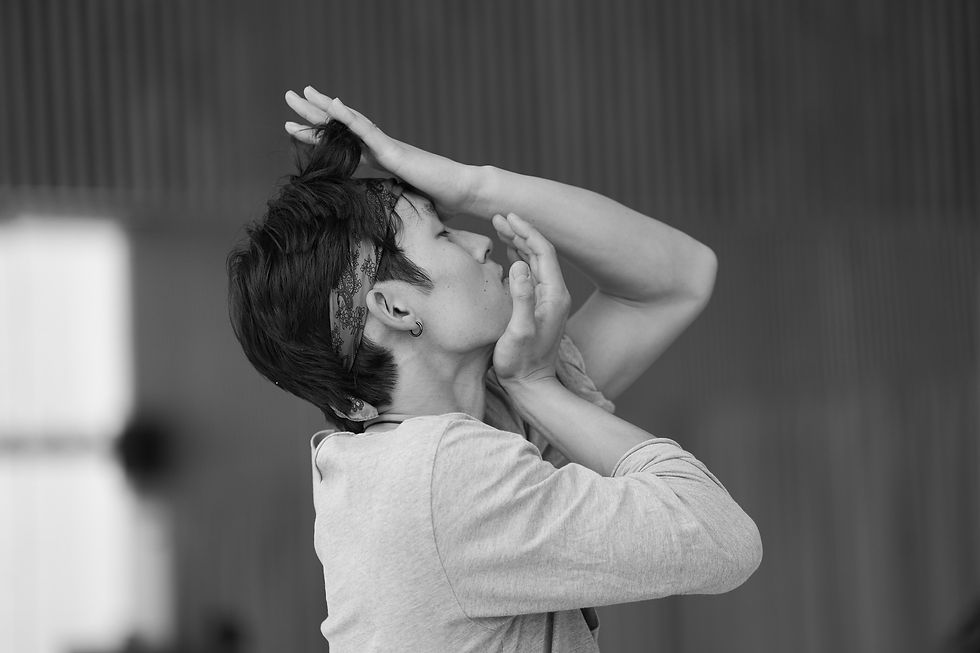
A man in profile places one hand on his jaw and the other on his forehead.
Rentaro Nakaaki rehearses   Jae Man Joo’s Auguries of Innocence for Rhythm Riott 2026. Image credit: Isabella Turolla.

Your work Divine for Gwangju City Ballet won the 2024 Korea Dance Artwork of the Year prize. Looking back, what did that recognition mean to you, and has it changed how you approach new commissions like this one?


When I first got the request from the Gwangju City Ballet, I was a bit anxious. It was because the topic was so big and important, dealing with a historical tragedy. Still, I felt like giving it a shot, remembering those hazy scenes and feelings I had in Gwangju when I was young.


So, through the work to remember the brave sacrifices of patriotic citizens who gave their lives fighting against violence and injustice, and to honor the people and their families who built democracy through ballet.


I was so honored to receive the Dance Art of the Year award. It meant so much to me. And I’m so grateful that the audience felt the emotion and stories I’ve shared through my work.


You have created work for companies including Complexions Contemporary Ballet, Pittsburgh Ballet Theatre and Ailey 2. How would you describe your choreographic voice, and has it shifted as you've moved between such different companies?


I’m dedicated to staying true to my artistic integrity by focusing on a genuine personal vision, rather than just trying to be popular. I want to keep drawing inspiration and sharing my stories and life experiences through my dance art and my unique perspective. It’s really important to me that my work stays personal, as I think that’s what truly matters.


Auguries of Innocence shares this programme with new work from Micaela Taylor and Balanchine's Symphony in Three Movements. What do you hope audiences take from seeing your piece in that company, and what would you like them to carry with them afterward?


The Triple Bill program is really exciting! The audience gets to see different voices, movement styles, and productions. It’s such a unique program, and I’m so excited to be part of it.


I hope audiences deeply connect with the emotional richness conveyed on stage, from the incredible costumes and set designs by Thomas Mika and lighting by Mark Henderson, Pēteris Vasks's stunning score and the exceptional dancers. I hope the audience will leave the theater with a greater sense of compassion to carry into their everyday lives.


2 dancers crawl across a stage.
Minju Kang and Jae Man Joo in rehearsal for Jae Man Joo’s Auguries of Innocence for Rhythm Riot 2026. Image credit Isabella Turolla.

Jae Man Joo's Auguries of Innocence is part of English National Ballet's new triple bill Rhythm Riot at Sadler's Wells from 24 September - 3 October.

Comments


INTERVIEWS
RECENT POSTS

© 2023 by New Wave Magazine. Proudly created by New Wave Studios

bottom of page