top of page

We Came Visited Bocconcino Mayfair For Dinner and Stayed For The Italian Education

5 minutes ago
5 min read

There are few better ways to reset between London Design Week and the beginning of fashion week than a long Italian dinner in Mayfair. New Wave made its way to Bocconcino on Berkeley Street, where 12 years of regional Italian cooking, polished hospitality and more than 300 wines have established the restaurant as one of the neighbourhood’s reliable destinations. Walking through the entrance immediately sets the tone. Our coats were taken at the door before we stepped into the restaurant, where sculptural lighting fixtures hang beneath a striking double-height ceiling that draws the eye towards the lower level. It is an entrance designed to make arriving feel like part of the occasion.


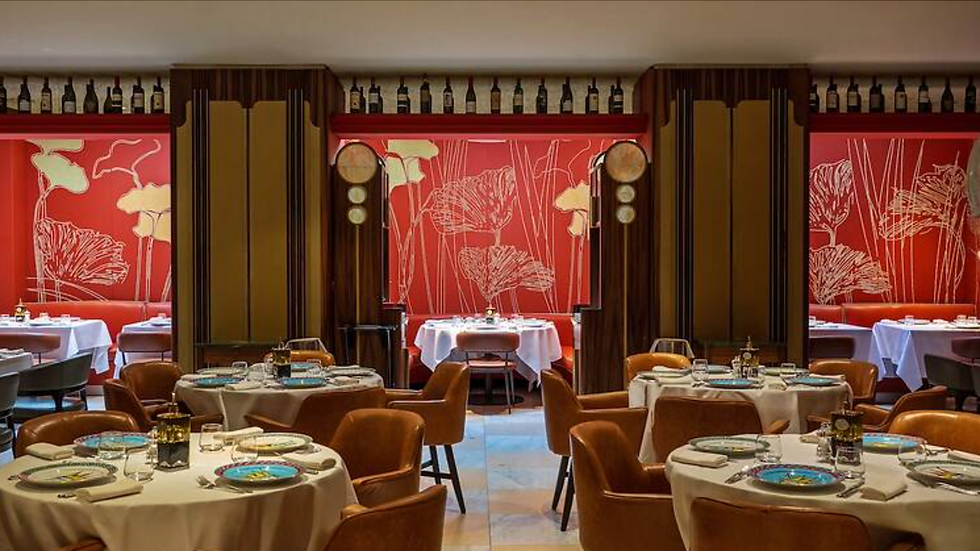
Then there is the artwork. A sculpted interpretation of Lady Godiva, finished with cascading locks of gold, occupies the space with the sort of theatrical presence that makes you stop for a second look. It adds another layer to Bocconcino’s identity, where food and hospitality sit alongside design, art and Italian cultural references. Upstairs, polished marble, crisp white tablecloths, tan leather banquettes and terracotta tones create an elegant warmth, while glimpses of gold and sculptural lanterns bring the polish expected from a Mayfair address. The effect is sophisticated without becoming overly formal.


The legendary figure, said to have ridden through Coventry to persuade her husband to ease the heavy taxes placed on its people, has become a symbol of sacrifice and standing up for others. At Bocconcino, that idea takes on a different but complementary meaning, reflecting the restaurant’s own philosophy of bringing people together through generosity, hospitality and shared experiences. Artistically, the sculpted figure’s cascading golden locks create an immediate focal point, catching the warm light of the room and adding a sense of theatre and luxury that sits naturally alongside Bocconcino’s marble, terracotta, leather and sculptural lighting. There is also something fitting about placing a centuries old British legend inside a contemporary Italian restaurant in Mayfair: both the artwork and Bocconcino take established cultural traditions and reinterpret them through a more polished, modern lens. The piece ultimately gives the space another layer of personality, making the restaurant feel like somewhere that values visual storytelling and cultural detail just as much as what arrives on the plate.


Before the food arrived, we were presented with the first challenge of the evening: the menus. Drinks, wine and food each came with their own extensive selection, while a basket of table bread arrived with a mix of breadsticks and softer options to keep us occupied. For a moment, dinner became a study session. Menus stacked on top of one another, pages being turned and options being reconsidered with every glance. The more we looked, the harder it became to decide. Eventually, we settled on a white wine and the Lungo cocktail, made with Everleaf Forest, ginger ale, orange juice and foamer, giving us a suitably refreshing start while we worked through the possibilities.


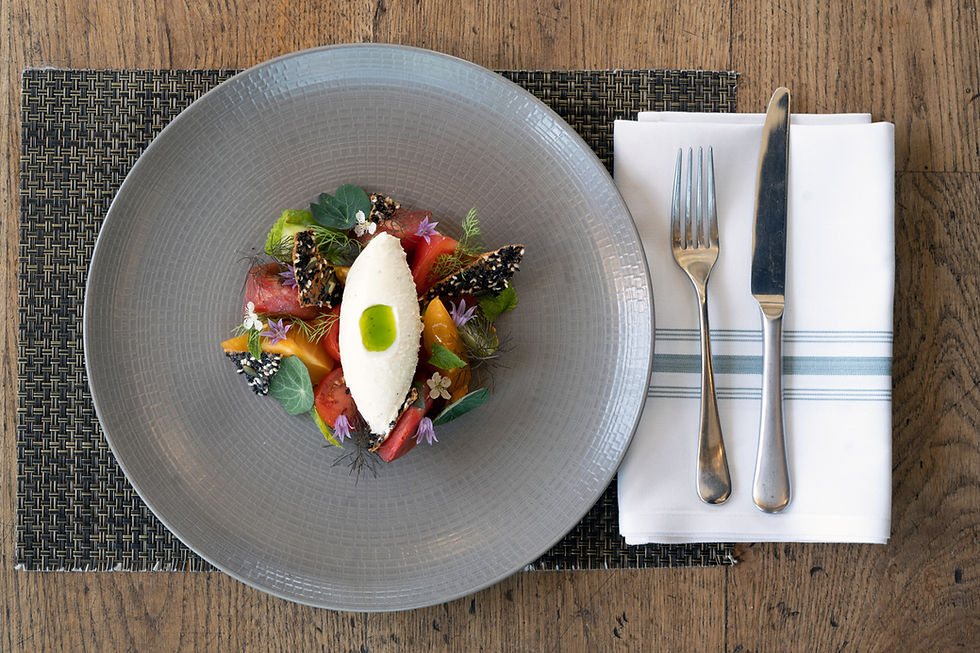
The starters eventually won the debate. We went for the Tartare di Tonno Leggermente Piccante, a slightly spicy tuna tartare served with tuna sauce, alongside Gamberi, Calamari, Rucola e Pomodoro, bringing together warm prawns, calamari, rocket, tomatoes and olive oil. Both arrived with a level of care that made the simplicity of the ingredients particularly apparent. The tuna was delicate with just enough heat to keep things interesting, while the prawns and calamari brought a warmer, more generous quality to the table. Freshness did much of the talking, with the seafood allowed to carry the dishes without unnecessary interference.


By this point, the restaurant had started to fill around us. What had begun as a relatively calm early dinner gradually became a full house, with every kind of Mayfair diner finding their way through the doors. There were solo diners enjoying their own company, groups of women coming in after an afternoon of shopping, a young mother dining with her child and an older father sharing dinner with his son. It was a useful reminder that Bocconcino’s appeal extends well beyond one particular type of customer. The room accommodates business lunches, intimate dinners, family gatherings and celebrations without losing its personality.


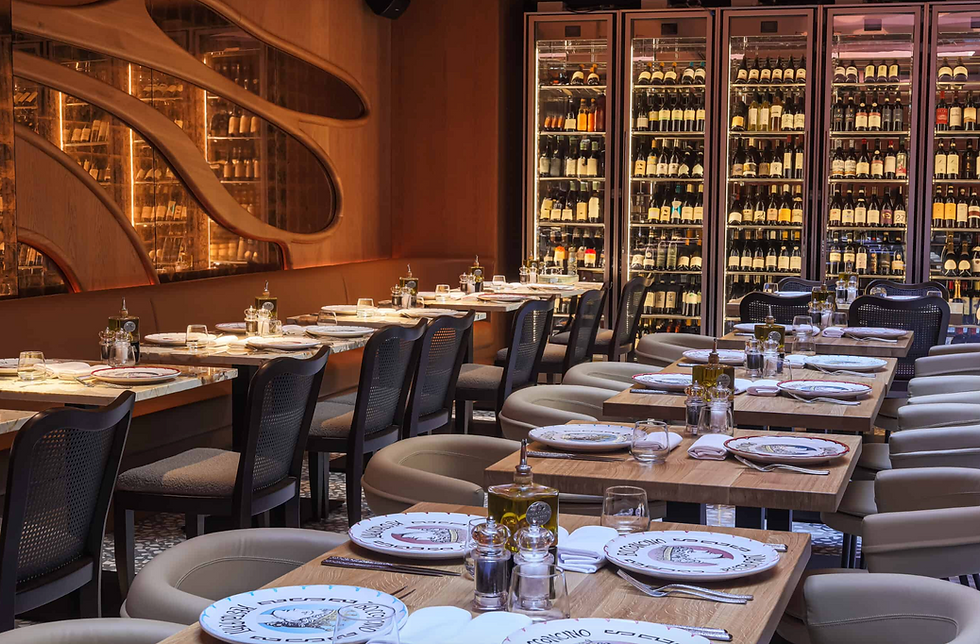
The lower level offers a different mood entirely. A dramatic iron spiral staircase leads downstairs, where the atmosphere becomes more spirited, with a bustling bar, open kitchen and seafood counter creating a sense of movement. A large wine cellar stretches across the wall near the entrance, filled with an extensive selection that reflects Bocconcino’s serious approach to Italian wine. The list travels through Piedmont, Tuscany, Campania, Sardinia and beyond, bringing together celebrated names with lesser-known regional varieties. It is the sort of feature that rewards curiosity, even if you arrived thinking you only wanted a glass.


Then came the main event. Our choices were the Linguine con Astice Scozzese e Pomodoro Ciliegino, combining linguine with Scottish lobster and cherry tomatoes, and the Costine di Manzo a Cottura Lenta con Crema di Patate al Tartufo, a slow-cooked beef short rib with creamed truffle potato. Both dishes demonstrated a kitchen that understands technique without allowing it to dominate the plate. The lobster linguine brought together the sweetness of the seafood, the acidity of the tomatoes and the pasta’s texture, while the short rib had been cooked to the point where the meat gave way effortlessly, matched with the richness of the truffled potato.


Our waiter made the experience even more personal with his wine recommendation, suggesting a red from his hometown of Naples to accompany the main courses. It was the kind of recommendation that felt more like being introduced to something with personal significance. That is where Bocconcino’s hospitality works particularly well. The service is polished, but there is room for personality, conversation and genuine knowledge. Throughout the evening, the restaurant maintained that balance between the precision expected in Mayfair and the generosity associated with Italian dining.


By the time dessert became a possibility, we had encountered a problem of our own making: we had eaten too well. The portions had done their job so convincingly that the prospect of another course required serious consideration. Our waiter, visibly disappointed by our lack of experience with the dangers of an Italian menu this extensive, took the dessert menus away with a look of pity. We had barely escaped the Tiramisù, the classic coffee-flavoured dessert with biscuits and whipped mascarpone cream; the Torta della Nonna, filled with custard cream and pine nuts; and the Fondente al Cioccolato con Gelato alla Vaniglia, a chocolate fondant served with vanilla ice cream. There were plenty more temptations waiting on the list.


Leaving Bocconcino, the lasting impression was less about any single dish and more about the completeness of the experience. During a week when London is moving between design studios, fashion appointments and cultural events, the restaurant offered its own version of the city’s creative energy: considered interiors, Italian craftsmanship, an impressive cellar, confident cooking and hospitality that understands how to make people stay. Twelve years on Berkeley Street, Bocconcino has earned its place in Mayfair by doing something deceptively simple and doing it exceptionally well: creating a space where people can come together, eat generously and find plenty of reasons to return.


Comments


INTERVIEWS
RECENT POSTS

© 2023 by New Wave Magazine. Proudly created by New Wave Studios

bottom of page