The Road to Venice Biennale: Ásta Fanney Sigurðardóttir on Culture, Evolution and the Efficacy of Simplicity
top of page

The Road to Venice Biennale: Ásta Fanney Sigurðardóttir on Culture, Evolution and the Efficacy of Simplicity

At a time when global art favours grand spectacle, Ásta Fanney Sigurðardóttir is taking a different path.


As Iceland’s voice at the Venice Biennale, her work seeks to occupy space rather than subdue it. By trading outward expansion for Inquisition, she displays a world defined by atmosphere, presence, and the latent gravity of being together.


When we spoke ahead of the Biennale, she described a process that has been both expansive and exacting, moving between sculpture, film, and sound while coordinating the physical realities of bringing a multi-sensory installation from Iceland to Venice. It is, as she put it, “a bit crazy… spicy times.” Yet beneath that complexity lies a deliberate simplicity in intention.


Her work resists grandiosity.


“I like to work with atmosphere… a connection between people,” she explained. “Not as many fireworks, more simple, real connection.”


This decision feels particularly arresting within the context of the Biennale, where national pavilions often lean toward scale as a marker of significance. Instead, Ásta proposes something more restrained. “Instead of going big… I’m making things smaller. Super tiny.” It is not a reduction in ambition, but a shift in focus, away from visual excess and toward emotional finesse.


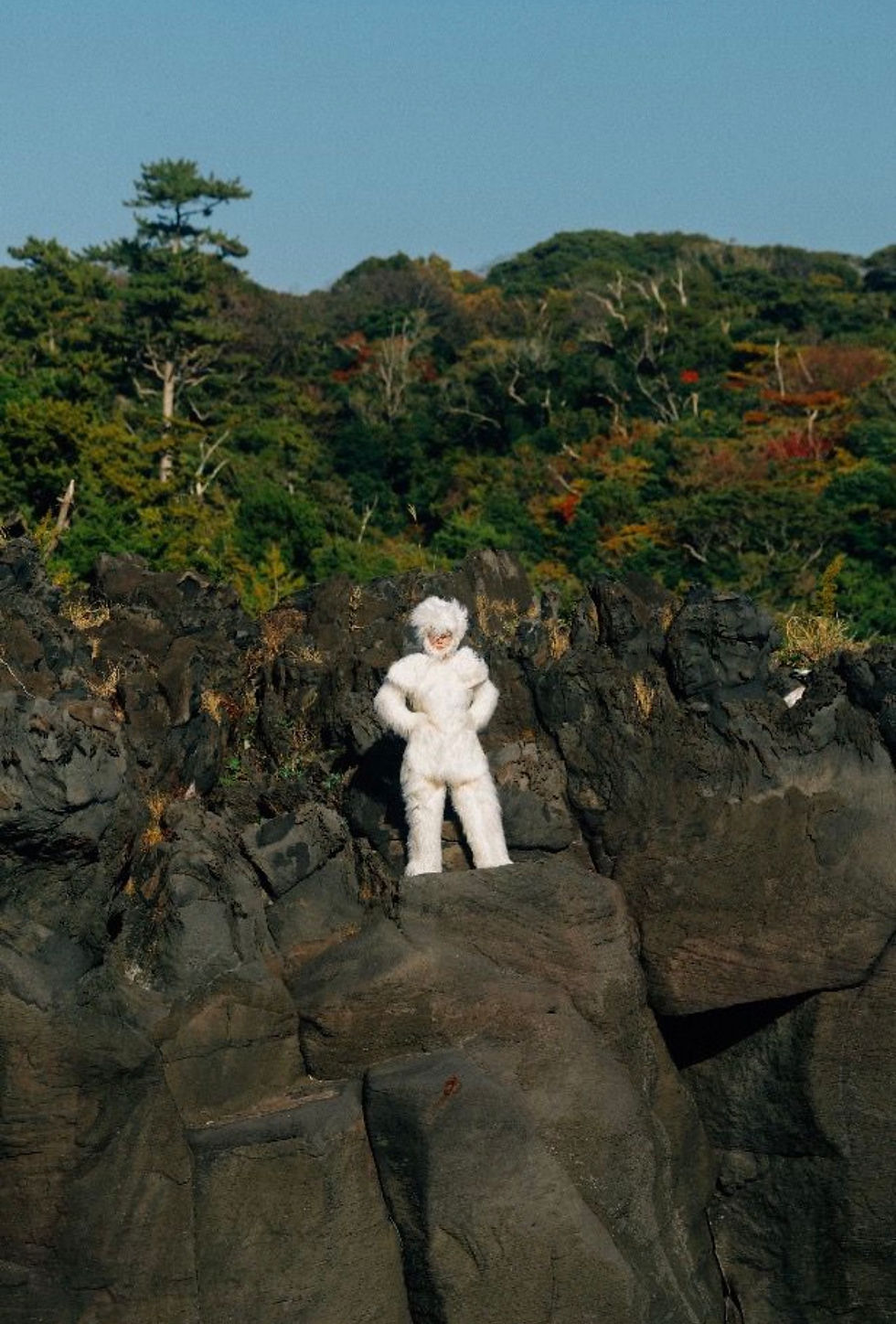
At the centre of her presentation, Pocket Universe, is a story that elicits both ancient and urgent. Through the figure of “Creature Zero,” she explores the search for the “first rock”, a symbolic return to the origin of creation. 


“We’re at a turning point,” she said. “A lot of things are adding up… it feels like a moment where we can make a shift.”


That shift, as she describes it, is not imposed through grand declarations but imagined into existence. Her work draws from cosmologies, myths, and oral traditions across cultures, using them as frameworks to rethink how the world might be rebuilt.


“If you can imagine something, you have the possibility to move in that direction.”


In this sense, her practice moves beyond representation into speculation. It asks not only what the world is, but what it could become. Change, for her, is not abstract, but is embedded in everyday decisions, perspectives, and acts of imagination.


“We make change with every moment,” she said. “Every decision… every perspective.”


This philosophy extends into the way she constructs her work across disciplines. Moving fluidly between poetry, music, film, performance, and visual art, she rejects the traditional expectation that artists must define themselves within a single medium.


“I don’t like limitations,” she said. “Or definitions that put borders on your soul.”


Instead, her process is one of connection, building bridges between forms, allowing ideas to move freely across mediums. It mirrors the conceptual framework of her work itself: a refusal to accept fixed boundaries, whether artistic, cultural, or intellectual.


Storytelling becomes the strand that holds these elements together.


“I think we understand everything through stories,” she noted. “We take information and turn it into something we can relate to.”


But rather than reinforcing divisions, her approach to storytelling seeks out points of convergence. At the Biennale, where national identity is often foregrounded, she is more interested in what connects people across geographies than what separates them.


“There are so many similarities,” she said. “I like to find that connection.”


This impulse toward connection is also reflected in the visual language of her installation. Sculptural forms resembling game pieces, charms, and symbolic objects introduce elements of chance, uncertainty, and belief. These are not merely aesthetic choices but conceptual tools, and also ways of engaging with the unpredictability of existence.


Her own experience while developing the project reinforced this idea. During a research trip to Japan, she encountered a series of coincidences that shaped her thinking.


“It felt like everything was connected,” she said. “Like things made sense in a way that wasn’t logical.”


This tension between logic and intuition runs through her work. She is particularly interested in what she describes as a state of being, one that exists somewhere between waking and dreaming, where perception shifts and new connections emerge.


“It’s like a part of the brain that’s only active when you’re dreaming,” she explained.


Through performance and installation, she attempts to create conditions that invite audiences into that space, where certainty dissolves and new ways of thinking become possible.


Yet beneath this openness lies a disciplined approach to making. When asked about doubt, an aspect of artistic practice often left unspoken, she described it as a constant presence, closely tied to fear.


“Doubt is like fear,” she said. “If you give it power, it grows.”


Her response is not to eliminate it, but to move past it. She relies on instinct, following her first thought and resisting the second-guessing that follows.


“You should always go with the first thought,” she said.

It is a method that reflects a broader commitment to intuition, not as something irrational, but as a form of knowledge in itself.


In representing Iceland at the Venice Biennale, Ásta Fanney Sigurðardóttir is offering a way of seeing, one that challenges the dominance of spectacle, reclaims the power of imagination, and reframes the role of the artist within a global context.


Rather than asserting a fixed identity, her work opens up a space of possibility. It suggests that nations, like individuals, are not static constructs but evolving narratives, shaped by stories, connections, and the willingness to imagine something beyond what already exists.

INTERVIEWS
RECENT POSTS

© 2023 by New Wave Magazine. Proudly created by New Wave Studios

bottom of page