
top of page

The Engineering Behind Buhurt Weapons: Where Medieval Design Meets Modern Sports Equipment

32 minutes ago
4 min read

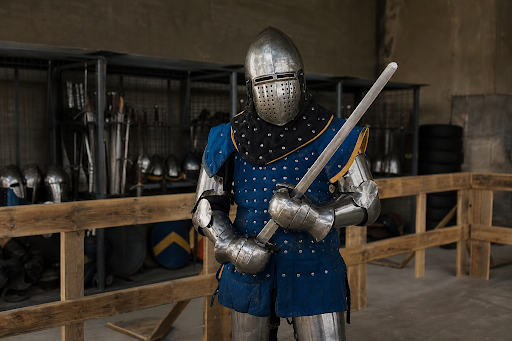
Modern buhurt weapons can be classified as high-quality, technological, and sports equipment. They are completely authentic in appearance to medieval tools – axes, swords, shields, etc., but are made with innovative engineering in mind. For Historical Medieval Battle, as an official sport, not only the design is important, but also the fact that the equipment must withstand extreme loads in full-contact fights according to the rules.

In turn, buhurt weapons are made blunted, rounded, and in such a way that they cannot cause sharp injuries to participants in sports competitions. They must fully comply with international standards and provide maximum reliability and safety for athletes. At the same time, other historical regulations and conditions must be strictly observed.

Medieval Inspiration, Modern Sporting Demands

Special sports weapons for buhurt resemble historical swords, axes, and polearms. However, they differ in nanomaterials and technological constructions. The tools are fully adapted for medieval combat so that athletes can conduct contact fights. The striking parts always undergo strict inspection before competitions. For example, under IMCF requirements, the mass, length, thickness, and shape of the working edges are clearly specified. Therefore, in addition to historical identity, modern tools are manufactured in such a way that they are suitable both for training and for repeated fights on special arenas.

Why Balance Can Matter More Than Weight

The weight of the equipment directly determines the load on the athlete, but by itself it cannot demonstrate how convenient the weapon is in combat. If the center of gravity is created correctly, then the modern knight will be able to move faster, feel a stable grip, and have precision during movements. If the weight of two identical types of equipment feels somehow different, then this indicates non-compliance with the standards. The geometry of the blade, handle, and other materials should be as even as possible. Therefore, when choosing any models, it is worth considering not only the materials, but also the weight.

Control During Fast Exchanges

Buhurt participants must skillfully control their weapons. They must feel every movement they make. Therefore, when transitioning from attacks to defense, it is necessary to control what the athletes hold in their hands. If the weapon's construction is very “inert” and unstable, the athlete will have to finish the tournament and leave the battlefield. If a one-handed sword, long sword, or polearm model is as balanced as possible and complies with engineering standards, the participant will be able to control the trajectory and position of their hands.

Fatigue During Long Tournament Days

If an athlete feels tired, it means that they chose the wrong weapon for buhurt. The point is that to withstand at least one full-contact fight, an athlete needs not only physical endurance and strength of spirit, but also a special weapon. It should be lightweight so as not to increase the load on the arms, lower back, and legs, especially during frequent strikes, dodges, blocks, and movements across the battlefield. Therefore, technical requirements establish a specific weight for different categories of tools. For example, one-handed swords should not be heavier than 1.9 kg.

Durability and Repeated Impact

Weapons for HMB are intended not for single tournaments, but for repeated competitions and exhausting training sessions. Therefore, special attention should be paid to the strength of the construction, the metal alloy, its condition, the reliability of all fastenings, and the absence of any defects. For example, polearm tools must be securely fixed to the shaft. Before starting tournaments, the controlling body most often checks the equipment, tools, and other equipment of the fighters.

Swords, Axes and Polearms for Different Roles

Each type of weapon is intended for certain strikes in tournaments. For example, a sword is suitable for close range. Thanks to an axe, it is possible to change the mechanics of strikes. Polearm tools provide additional length and allow the athlete to control what is in front of them. Therefore, each category differs in length, weight, shape, and design features. And these are:

  1. One-handed axes have a weight of up to 1.3 kilograms;

  2. Long versions are produced according to the dimensions established by the competitions;

  3. Polearm tools can have a weight of up to 3 kg.


The main thing is that it complies with international requirements and is safe for all participants.

How Better Equipment Is Changing Armored Combat

The evolution of equipment from the historical Middle Ages has undergone changes – from the strength of constructions to the use of nanotechnologies. International regulations govern weapons for buhurt – the weight, dimensions, shapes, and fastening of elements are specified. Before the start of tournaments, each athlete's equipment is checked for safety and compliance with standards. This means that sports tools are not simply copies of medieval images. This is a weapon that allows admission to sports competitions and passing the technical marshal's inspection.

Why Experienced Fighters Treat Weapons as Part of a Complete System

Every experienced HMB athlete should evaluate not only the weapon, but also all their equipment: armor, protection, shields, and other equipment. Equipment is chosen for a specific discipline. High-quality models provide a reliable grip and control in combat, and their parameters must comply with international requirements. Special attention is paid to the condition of the weapon and equipment. All elements undergo technical and historical inspection. Equipment is selected taking into account compatibility, safety, and the requirements of a specific combat format.


Comments


INTERVIEWS
RECENT POSTS

© 2023 by New Wave Magazine. Proudly created by New Wave Studios

bottom of page