The Devil Wears Prada 2 is a Desperate Love Letter to Journalism
top of page

The Devil Wears Prada 2 is a Desperate Love Letter to Journalism

As the theatre fills with people, you can read the mixed expressions of nervous anticipation and excitement on everyone’s face. The Devil Wears Prada’s long awaited sequel is finally here. Despite criticisms of the commercial motivations and production of the film flooding social media, fans are still rushing to their nearest cinema.


Watching it feels like immersing yourself into a distant memory. You sink seamlessly back into New York’s chaotic fashion world and the constant buzz of Runway’s offices. With every catty snide remark, the cinema roars with laughter and you become more enthralled.


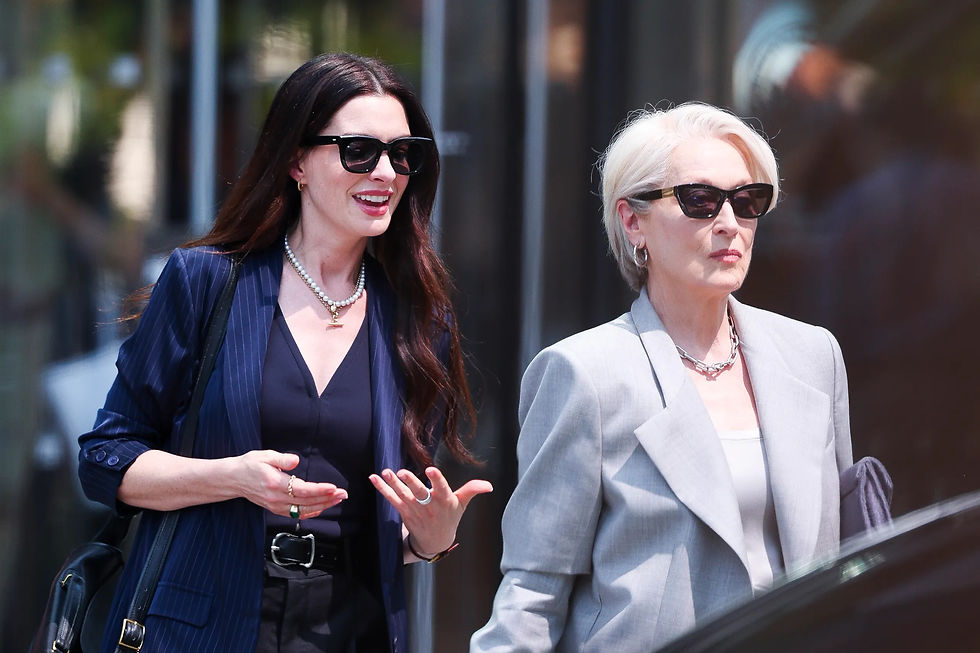
Director David Frankel reunites with the original cast of Anne Hathaway, Meryl Streep, Stanley Tucci and Emily Blunt. New additions to the star-studded cast also include Bridgerton’s Simone Ashley, The Office’s B.J. Novak, Australian actor Patrick Brammall, Kenneth Branagh and Justin Theroux. Several impressive cameos also feature including Lucy Liu, Lady Gaga, Ashley Graham, Winnie Harlow, Donatella Versace and Law Roach to name a few.


After such a long stretch of time since the first film, it feels impossible not to scrutinise the sequel in comparison. However, its production remains reminiscent of an authentic 2000s romantic-comedy; the same unapologetic sass, just with a few modernised quips.


Twenty years later, Andrea “Andy” Sachs (Anne Hathaway) is a successful journalist, who has just been fired from her job. She reluctantly finds herself working for Runway once again - this time as Features Editor. Just like the first film, she’s still the clumsy underdog that stumbles over her words when speaking to Miranda.


Arguably the most beloved character, Meryl Streep revisits her iconic Miranda Priestly, who remains the ruthless Editor in Chief, yet now relentlessly policed by her latest assistant, Amari (Simone Ashley) whenever she fails to be politically correct. In the face of change, she begins to question her place and whether it’s time for her to step away from the magazine.


Nigel (Stanley Tucci) is still taken for granted as Creative Director and second in charge. We’re reintroduced to Emily Charlton (Emily Blunt) as the Head of Dior, still harbouring her unwavering penchant for tactless comments. Among trips to the fashion closet, a quick getaway to the Hamptons and a brief stop in Milan, Andy and Miranda find themselves scrambling to save Runway when its future is threatened.


The media buzz around this release may cast it as commercial, trendy and therefore inauthentic, but the issues it addresses are far too real. People no longer seem to be concerned with taste and culture anymore. Instead they’ve become accustomed to seeking out virality and clickbait. At one point Nigel claims that Runway is no longer a magazine because they’re more focused on social media metrics than stories with substance. 


This ‘slow death of journalism’ rhetoric anchors the film, and it’s why we position the key theme of this sequel as contrast. It’s a story told in the same offices about the same characters, yet in a now almost unrecognisable industry. 


Beautifully, it still serves as a reminder of why people fall in love with the industry in the first place; an industry whose legacy has been forged by those with a relentless commitment to protecting what it stands for. Hopefully, audiences will remember a time when it was about more than likes and reposts, but authentically shared cultural moments, just as the sequel itself represents.


Frankel revives the edgy humour of the characters, while reflecting the current realities of severe budget cuts, layoffs and the decline of print media. Miranda refuses to accept this or cave to the threats of AI snatching away the livelihoods of her peers. She maintains the film’s entire premise - journalism and fashion are both important artforms. Ultimately, the film remains a fun, romantic-comedy, reinvigorated with a cool streak of defiance.


Whether the Devil Wears Prada 2 is powerful enough to create change for the future of fashion journalism is questionable. It fails to convey actual solutions to revive print media, although that seems to be the point. There is no clear solution. 


However, through its romanticisation of enviable style and nostalgic humour, the film excels at accurately depicting the struggle that journalists are experiencing today.


Perhaps we can hope this will renew people’s interest in fashion media. A twenty year comeback is certainly a long time to wait, but the industry has arguably never needed this return more.


INTERVIEWS
Mens Journal 1x1.png
RECENT POSTS
Mens Journal long.png

© 2023 by New Wave Magazine. Proudly created by New Wave Studios

bottom of page