top of page

Preston Pablo Is Finding New Ways To Understand Himself Through Music [Interview]

9 hours ago
6 min read

There is something quite revealing about listening to music you made a year ago and realising you no longer feel the same way. For Preston Pablo, that distance has become part of the experience of releasing Almost Always and All At Once, two sister EPs that capture a particular period of his life while offering a glimpse of how much can change in the space between writing a song and sharing it with the world. The Canadian singer-songwriter has already experienced a remarkable introduction to the industry, earning a JUNO Award, multi-platinum success with “Flowers Need Rain” and a viral moment with “Dance Alone”. Born in Timmins, Ontario, and now based in Toronto, the Filipino-Canadian artist has built an audience through a natural balance of heartfelt songwriting, infectious pop melodies and dance-driven production. With nearly a billion global streams, his next chapter is less about proving his ability to make a hit and more about discovering what else he can express.


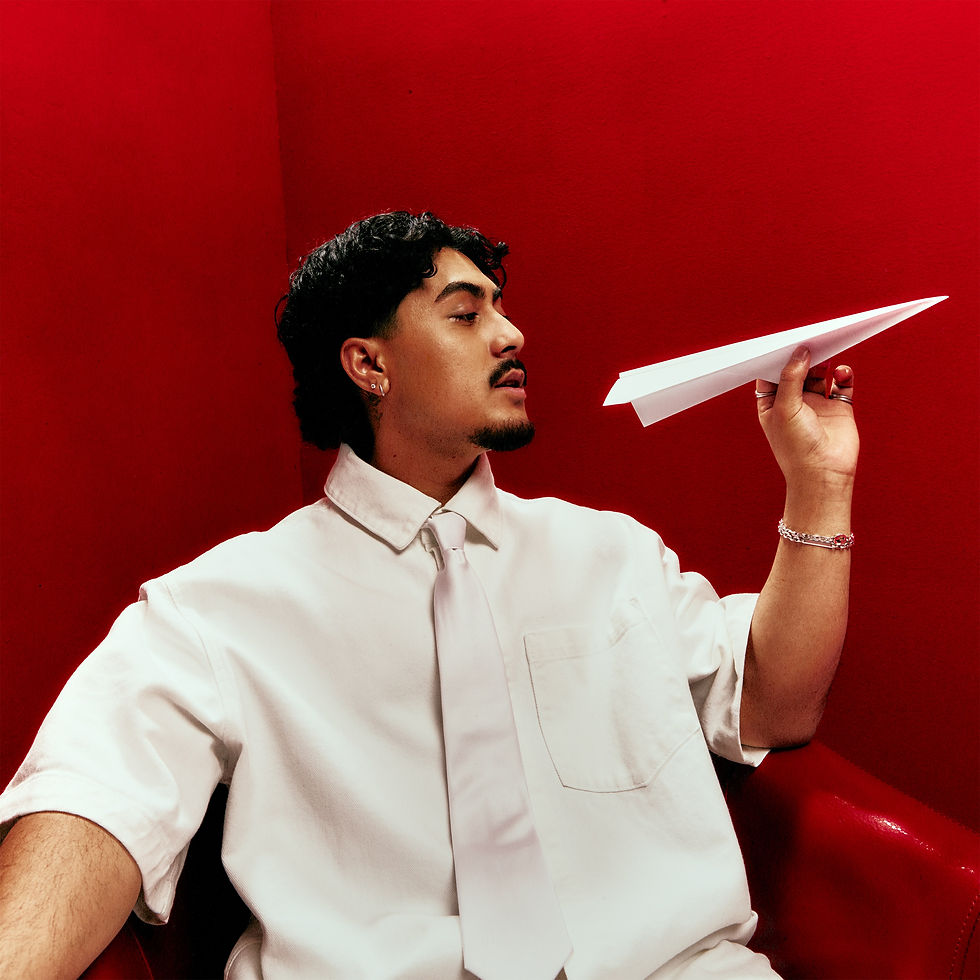
Photo Credit: Adem Boutlidja


Released in 2026, Almost Always and All At Once were conceived as two parts of the same creative period, with Preston describing them as one larger project separated by mood and musical direction. The former gravitates towards more reflective, emotionally restrained moments, while the latter embraces brighter arrangements, punchier production and a more energetic pop sensibility. Across the two, he explores the familiar complications of relationships, from the contradiction of missing someone you perhaps shouldn't to the vulnerability of recognising your own shortcomings. “Hate That I Miss You” draws on the nostalgic sounds of early 2000s pop, while “Less of Me” reveals a more uncomfortable side of songwriting, one that requires him to confront his own insecurities. The contrast gives the projects their character, allowing playful pop instincts and more personal observations to exist alongside one another.


Speaking to New Wave, Preston opens up about the experiences behind the music, the creative freedom he found while working between Toronto and Los Angeles, and his growing desire to take a more hands-on role in production and instrumentation. There is a refreshing honesty in the way he discusses his development, particularly when reflecting on the JUNO win that introduced him to a wider audience and the person he has become since. He is still discovering what he wants to say, learning to sit with emotions that are not always easy to articulate and recognising the value of making himself uncomfortable. Perhaps that is what makes this chapter particularly interesting: beyond the milestones and streaming figures, Preston is becoming increasingly curious about himself, and allowing that curiosity to shape the music.


Almost Always and All At Once are sister EPs that live in the same world. What connected the songs for you, and what made you want to release them as two parts? 


The bulk of these songs were written during the same time in my life, which naturally gave the songs a sense of cohesiveness. It just felt right to have all of these songs live in the same universe, even though I had to split the project into two separate EPs, I still consider them one big EP. 


You’ve said you shaped the projects around feeling and sonic flow rather than a strict storyline. How did you decide which songs belonged on All At Once?


I wanted “All At Once” to feel a bit more uptempo and bright. “Almost Always” sounds more moody, emotional, a bit more relaxed in a sense, whereas “All At Once” starts off with a song like “Anything” which is super punchy, very in-your-face kind of song, and kind of stays that way for most of the EP. Whatever songs fell into this category went onto EP2. 


“Hate That I Miss You” holds two feelings at once: missing someone and being frustrated that you do. What drew you to that contradiction?


It was honestly the chords of that song that led me to writing about that particular feeling. The way that Peter played them felt very playful, but kind of in a bittersweet way. I don’t think I was missing anyone at that particular moment but I definitely have before and I just leaned into that. Missing someone is a feeling most people can relate to, but  I believe that sometimes there’s more to it than just missing someone, which is where the moral of this song came from. 


The track has a playful, early-2000s pop feel. Were there particular sounds or songs from that era you had in mind while making it?


I was actually listening to a bunch of early childhood pop songs at that time. Every once in a while I get the nostalgia itch and start listening to songs I loved when I was a kid. During the time I wrote “Hate That I Miss You” I’m sure it was a mixture of early JB, Katy Perry, Bruno Mars, Kesha etc. 


The EP moves through infatuation, jealousy, devotion and self-reflection. Did writing these songs change how you think about any of those feelings?


I think in some ways it has, more so now than right after I wrote the songs. 


I’ve had time to process things and live some more life which has definitely brought growth in some of the areas I touched on in the EP. Lately I’ve been striving to spend more time in my own mind with my own thoughts, trying to better understand myself and all my emotions. It’s interesting to listen back to some of these songs now and compare the way I felt then to how I feel now. 


“Less of Me” turns inward and looks at your own shortcomings. Was it harder to write than the more romantic songs?


It was definitely more challenging to write than the others. Looking inward and writing about it isn’t something I had done a lot of at that point. I still don’t do it as much as I’d like to, mainly because it can be scary. Taking accountability, recognizing one’s own faults and insecurities are very hard to do, period. Turning those kinds of things into art and being vulnerable enough to put it out there for the world to see and hear is beautiful but very scary. I do believe that these kinds of practices are what result in the most growth as a person. Being uncomfortable and doing things you don’t necessarily want to do is essential for growth. 


You spent much of 2025 writing and recording between Toronto and Los Angeles. How did those different environments affect the music or the way you worked?


LA opened up a whole new space for creativity. Being there was again, new and uncomfortable, which pushed me to work harder. I felt more motivated, inspired and energized to be in a new place with new people. I experimented a lot and would try things there that I normally wouldn’t do back home. Once I got back and continued writing, I took that same energy and things I learned from LA back with me. I think writing music in different environments is very very important, especially during the early stages of being an artist. 


You’ve become more hands-on as a musician and creator, co-producing some tracks and bringing live instrumentation into the recordings. What did you learn about yourself in that process?


I learned that I love being more involved in the creation process of music. I really enjoy production and playing instruments. I started off playing drums, which was what helped me become a singer songwriter. It can suck sometimes to just sit back and not be able to do anything other than write or sing in a session. It feels like I’m more useful to everyone in the room when I can pick up a guitar and lay some chords down or communicate my ideas better through an instrument. It’s something I’m actively trying to do more of and get better at. 


You won the JUNO for Breakthrough Artist in 2023. Looking back, what has surprised you most about the years since then compared to now?


It almost feels like that was in another lifetime. Feels weird to even write that down but it’s kind of true. I feel like so much life has happened since then and I’ve changed so much that it’s hard to even put myself in that position now. I think I just feel like a different person in a lot of ways. It’s a very special moment that I will cherish forever. I’m extremely grateful for that accolade and everything it’s brought me but I’ve definitely  processed it now and have moved on, in a good way of course. 


Now that Almost Always and All At Once are out in the world, what do you hope listeners notice when they hear the two EPs?


I hope that people who are listening to these EPs can find a place for at least one song in their life. That’s always my hope with songs I release. I always want people to connect to my music in a real way. I make music that I would personally listen to and connect with in hopes that other people can do the same. I want listeners to take away whatever they need from any of these songs. 


Comments


INTERVIEWS
RECENT POSTS

© 2023 by New Wave Magazine. Proudly created by New Wave Studios

bottom of page