top of page

KOSHIK: WHAT WE CARRY WITH US

3 hours ago
8 min read

At 23, Aida Maralian is building a luxury footwear label from something far older than herself. Rooted in Armenian memory, ancient craft and the stories passed between generations, Koshik asks what it means to carry the past without becoming trapped by it.


Legend says that Armenia’s Areni Cave reveals its gifts only to those who enter with a pure heart. For Aida Maralian, that story has become part of a much larger one.

The cave is home to the Areni-1 shoe, the world’s oldest known leather shoe, an extraordinarily preserved piece of footwear dating back more than 5,000 years. Where most might see an archaeological object belonging behind museum glass, Maralian saw the possibility of something contemporary. It would eventually become the starting point for Koshik.

But to understand why a shoe made thousands of years ago became the foundation of a young London-based luxury label, it helps to understand Maralian’s relationship with Armenia itself, because hers wasn’t always straightforward.

Growing up, culture was something her family worked hard to pass down. As a teenager, however, Maralian remembers questioning why tradition mattered quite so much. “I wasn’t really connected to my roots and culture,” she tells New Wave, remembering how she would wonder why everything had to be “so traditional.” At the time, fitting into the world around her felt easier than interrogating the one she had inherited. 

Coming Back to Armenia

Growing older changed that relationship. Cinema became one of her routes back, followed by Armenian music and a growing curiosity about the culture she had once struggled to understand. She mentions musicians Komitas and Sayat-Nova as part of that rediscovery, and describes returning to Armenian films as she got older, finding new meaning in stories she had first encountered when she was too young to fully understand them.

Today, she struggles to separate that culture from who she is. When she feels tired or overwhelmed, returning to it has a grounding effect. As she puts it, Armenian culture “fills every part of my soul.” 

That reconnection also happened much closer to home. Maralian loves looking through old family albums and studying the way her mother and grandmother dressed. She remembers something distinctive about their clothes: feminine and shaped, but never overly revealing. It is a sensibility she now recognises in the way she styles and approaches design herself. Before the research, collections and fashion films, there were simply women getting dressed, unknowingly leaving behind references for another generation.

There are still parts of that inheritance Maralian has yet to explore. She speaks excitedly about Armenian traditional dress, forgotten footwear techniques and the symbolism woven through Armenian carpets. During university, she researched the histories behind particular carpet motifs and colours, including an Armenian red that would later inspire the name of one of Koshik’s own colourways. Now she imagines those codes finding their way into future collections. There is an eagerness when she talks about it, as though building Koshik has also given her another reason to keep discovering Armenia for herself. 

Koshik’s first story, however, began with a shoe.

The Shoe That Survived

Maralian cannot remember exactly where she first encountered the Areni shoe. It may have been an image online, but what she does remember is her surprise. The oldest known leather shoe in the world had been discovered in Armenia, yet she had reached her late teens without really knowing its story.

Later, while considering what to pursue as a university project, the memory returned. Her research led beyond the archaeological discovery and towards traditional Armenian footwear, where she began noticing similarities. During one encounter, she found a simple pair of shoes with contrasting red laces and remembers simply staring at them.

What fascinated her was also what saddened her. The tradition was disappearing from everyday life and increasingly becoming something, people looked back on as history. “There should be a form that brings it back,” she remembers thinking. 

That did not mean creating a replica. The original Areni shoe is remarkably simple in its construction, with leather held together through lacing. Maralian wanted to retain that principle while acknowledging that footwear created thousands of years ago was never designed for contemporary pavements, commutes and everyday life.

Her solution was translation rather than reproduction.

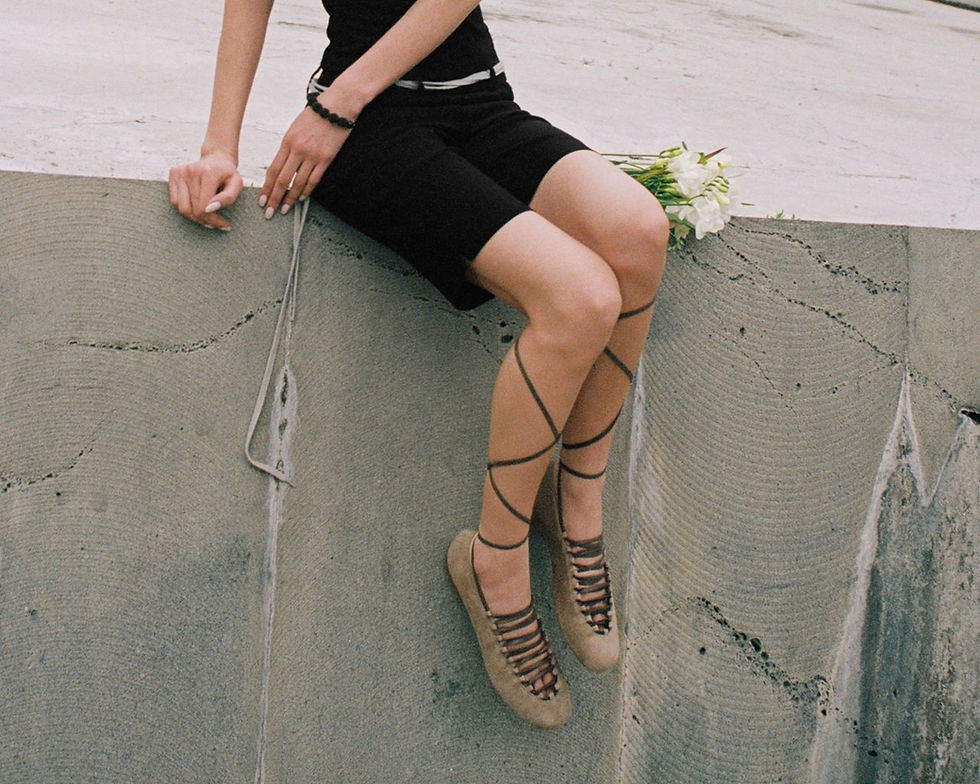
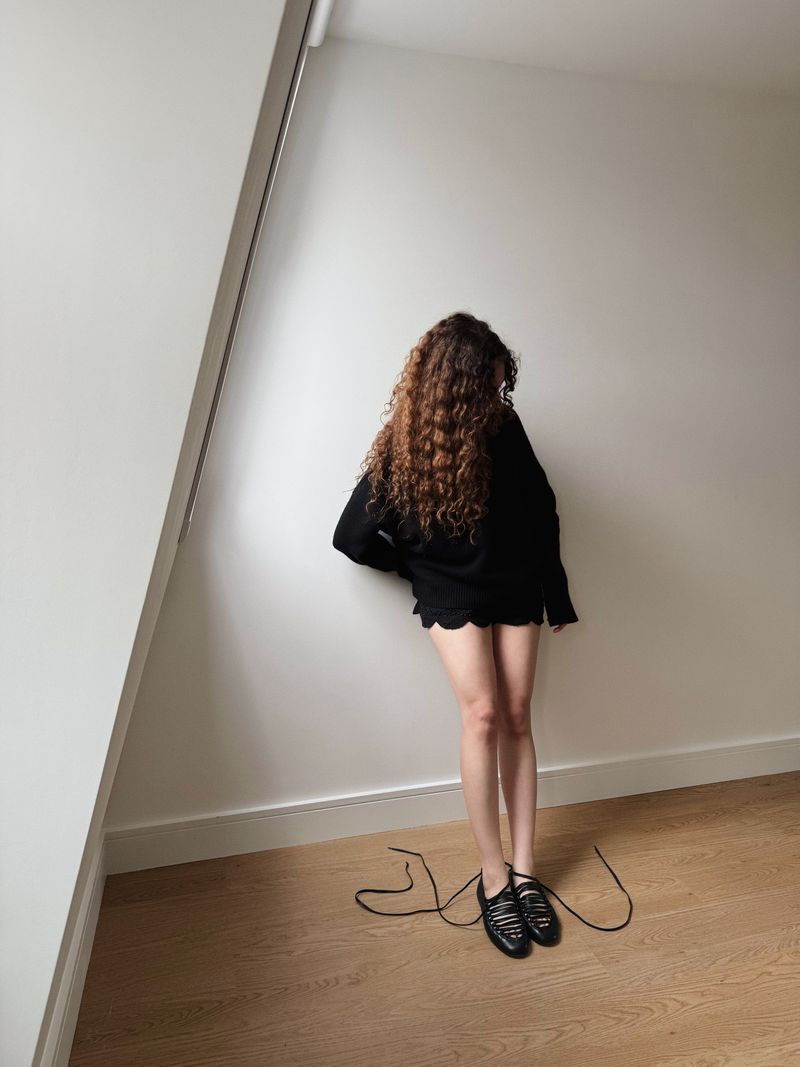
Look at Koshik’s Areni Flat today and its long cords initially appear decorative, winding around the foot and ankle almost like jewellery. During our conversation, however, Maralian demonstrates something important: remove the lace and the shoe cannot properly function. The lacing is not simply a visual reference added to make the Armenian history legible; it is integral to how the shoe works. 

The past is there, but the wearer does not necessarily need to recognise it immediately.

When Heritage Becomes Fashion

That subtlety is deliberate. Throughout the development process, Maralian admits she worried about crossing a difficult line: how do you draw from cultural history without producing something that feels like an artefact?

It remains a question she asks herself now, particularly as she considers incorporating more recognisable Armenian motifs into future collections. She admits there are moments when she worries a reference could become “too cultural” or begin to resemble “a museum piece rather than actual fashion.” 

It is an interesting tension for a brand whose cultural roots form such an important part of its identity. Yet preservation does not necessarily have to mean replication. Maralian’s approach has been to retain the logic, memories and stories surrounding Armenian objects while allowing their forms to change.

The Areni Flat does not require its wearer to know anything about Armenian archaeology. Someone could encounter it simply as a contemporary shoe, only discovering the history behind its construction afterwards. Maralian says this reaction has already happened: people initially see something modern but become fascinated once she explains what sits behind it. For her, that response suggests she has found the balance she was looking for. 

Koshik therefore becomes less about reproducing history than allowing it another life.

Armenia, Italy and London

That negotiation between history and modernity extends to where Koshik’s shoes are made. The label is Armenian-rooted and London-based, while its footwear is produced by specialist craftspeople in Italy. Maralian would eventually like that geography to change.

“I would love to manage to manufacture in Armenia one day,” she says. 

She speaks proudly about Armenia’s history of leatherwork and shoemaking and the reputation Armenian craftspeople once held across the Soviet Union. She believes the knowledge exists, but at the scale and quality she currently wants for Koshik, accessing the necessary materials and manufacturing infrastructure remains challenging. For a young luxury label asking customers to invest in its products, longevity cannot be sacrificed for symbolism.

Maralian becomes particularly animated when talking about quality. “I’m very nerdy about it,” she admits. She wants Koshik’s shoes to be worn repeatedly and to become pieces people keep rather than products whose value rests solely in their story. She wears her own constantly. 

For now, Italy provides the specialist craftsmanship required to realise the product at that level. Armenia supplies much of the history, landscape and creative community informing Koshik, while London has become the place from which Maralian can introduce those stories to an international audience.

Her relationship with London is particularly important. During her studies, she explored how Armenian cultural heritage could enter an international fashion market through appreciation rather than appropriation. She now sees London as one of the places where an emerging designer can find an audience, recalling the university support, funding and industry interest she has already received. 

Rather than cancelling one another out, Armenia, Italy and London each carry a different part of Koshik.

Beyond the Shoe

If footwear is Koshik’s physical object, film is where Maralian allows its world to expand. Her fascination with the medium grew partly through one of her closest friends, a filmmaker whose own culturally connected work made Maralian think differently about what a fashion campaign could accomplish.

A photograph can present a shoe, but film can create an entire world around it. For Maralian, that meant communicating Koshik in a way that felt artistic rather than purely commercial. “There’s so much more you can tell” through film, she explains. 

That instinct resulted in Why Are You Barefoot? Filmed across Armenia, the project returned Koshik physically to the landscapes surrounding its inspiration and drew upon the legend connected to the Areni Cave: that those who enter with a pure heart, good intentions and goodwill may find what they seek.

The film went on to be shortlisted in the Luxury category at the Berlin Fashion Film Festival 2025, remarkably before Koshik had even officially launched. There is something fitting about that chronology. Before the brand had properly entered the marketplace, its story had already begun travelling.

Postscript

Now there is another chapter. Released through London Fashion Week’s DiscoveryLAB digital schedule, Koshik’s latest fashion film, Postscript, moves beyond Areni to explore a wider and more intimate portrait of Armenia.

At its centre is a girl writing a letter to someone whose identity is deliberately withheld. “She shares her memories with this person in Armenia,” Maralian explains, but the audience is never told exactly who the letter is intended for. Instead, she wants the viewer to decide. 

The film travels through places Maralian associates with Armenia, including monasteries, Lake Sevan, landscapes and domestic spaces that carry their own cultural familiarity. Some references are intentionally left unexplained. Rather than attempting to translate every detail for an international viewer, Maralian allows them simply to exist.

Where Why Are You Barefoot? brought the audience towards Areni and the origins of Koshik, Postscript feels more intimate. It is less about explaining where a shoe came from and more about the memories, landscapes and emotions that make somewhere feel like home.

This is where Koshik increasingly seems comfortable existing: somewhere between fashion and memory, where a shoe can lead to a cave, a landscape can lead to childhood, and a fashion film can feel almost like a letter home.

Twenty-Three

There is another detail about Maralian that is not immediately obvious when looking at Koshik: she is 23.

People are frequently surprised when they find out, something she seems amused by. By the time we speak, she has already developed luxury footwear across countries, established a visual identity around it, created fashion films in Armenia, received recognition from an international film festival and brought Koshik onto London Fashion Week’s DiscoveryLAB schedule.

Maralian herself seems less interested in treating her age as an achievement. “I don’t think I’m young,” she says. Instead, she talks about the people around her: her parents, grandparents, friends and collaborators who have believed in what she is building. 

“My ambitions come from somewhere, and it’s probably my family,” she explains, speaking particularly warmly about the love she receives from her grandparents and the daily support surrounding her. There are moments when running the brand feels frightening or overwhelming, but she also has a strong sense that this is the right time for her to be doing it. 

It makes her age interesting without making it the most interesting thing about her.

What We Carry With Us

Koshik officially launched only months ago, but Maralian is already thinking beyond the Areni shoe. There are carpets she wants to research further, symbols she wants to understand, colours whose histories she wants to uncover and elements of traditional Armenian dress she has only begun investigating.

She talks about these possibilities less like someone gathering references for future collections and more like someone discovering rooms in a house she has lived beside all her life. The Areni shoe may have opened the door, but it does not have to be the entire house.

That distinction will matter as Koshik grows. Armenian culture cannot become a single archaeological discovery endlessly reproduced across products. What Maralian appears interested in building instead is a design language capable of changing as her own understanding of Armenia changes.

There is something particularly touching about where that leaves her story. The teenager who once questioned why her family needed to hold so tightly to tradition is now actively researching the things previous generations carried forward. Her mother’s style, her grandmother’s style, traditional footwear, carpets, colours, music and landscapes have all become part of the way she sees, whether or not every reference eventually becomes a Koshik product.

When I ask what she hopes somebody discovering Koshik years from now might understand without knowing anything about the Areni shoe, Maralian does not immediately talk about commercial expansion or becoming a recognisable luxury name. She talks about Armenia.

She wants people to encounter Koshik and become curious about the country behind it. She hopes they might learn something, recognise Armenia differently or even feel inspired to experience its landscapes themselves. For her, fashion can offer something beyond selling products or helping somebody look fashionable. “Good fashion can connect people.” 

Perhaps that is the simplest way to understand what Aida Maralian is building. More than 5,000 years ago, somebody made a shoe in Armenia and, against extraordinary odds, it survived. Thousands of years later, a 23-year-old Armenian designer found its story and decided it was worth carrying a little further.


Comments


INTERVIEWS
RECENT POSTS

© 2023 by New Wave Magazine. Proudly created by New Wave Studios

bottom of page