top of page

10 Things We Love About LADIPOE

Nigerian rap artist LADIPOE has returned with his sophomore studio album. Titled REVIVAL, the uncompromisingly pan-African project is themed on faith in self, community, collaboration, and African excellence in lyricism. 

A project years in the making, REVIVAL serves as LADIPOE’s most complete statement yet and the beginning of his next chapter. Across the 16 tracks are guest appearances from diverse cultures and different countries. 

Known for his lyrical dexterity and intellectual wit, the Leader of the Revival, as he’s popularly referred to, has become a defining voice in Afropop’s rap renaissance. 

Embracing the REVIVAL season, New Wave sat with LADIPOE to discuss the impact of his second studio album on his musical motion. Here are 10 things we love about LADIPOE. 

We love that, at first, you gave us the EP Providence. Now, the album REVIVAL. Are these titles spiritually rooted? 

I think that we are spiritual beings, so everything we do is spiritually rooted…right? But these did not directly come from spiritual inspiration. 

What I do think is they just capture the time, you know. Providence was taking a leap of faith, that’s what that era felt like and that’s what providence means. In the Bible, it means what it means and it encapsulates this whole era as well. 

But the fact that they feel spiritually linked or thematic, it just sticks to when you are walking in a path that is aligned. I guess things now start to connect in a way that you didn’t see from the beginning. 

We love that you go by the ‘Leader Of The Revival’, long before we knew this album was on the way. Did you have this album in mind at the time you started going by LOTR or it just happened to fall together?

It just happened to fall together. At the time I started calling myself LOTR—no, I didn’t know in the future I would have an album called REVIVAL. But it’s funny because, in the immediate years and months leading up to the album, it was obvious it could be no other name. 

So you are psychic? 

I’m psychic? No. I just think that I make sure I’m listening to my inner voice as much as possible. 

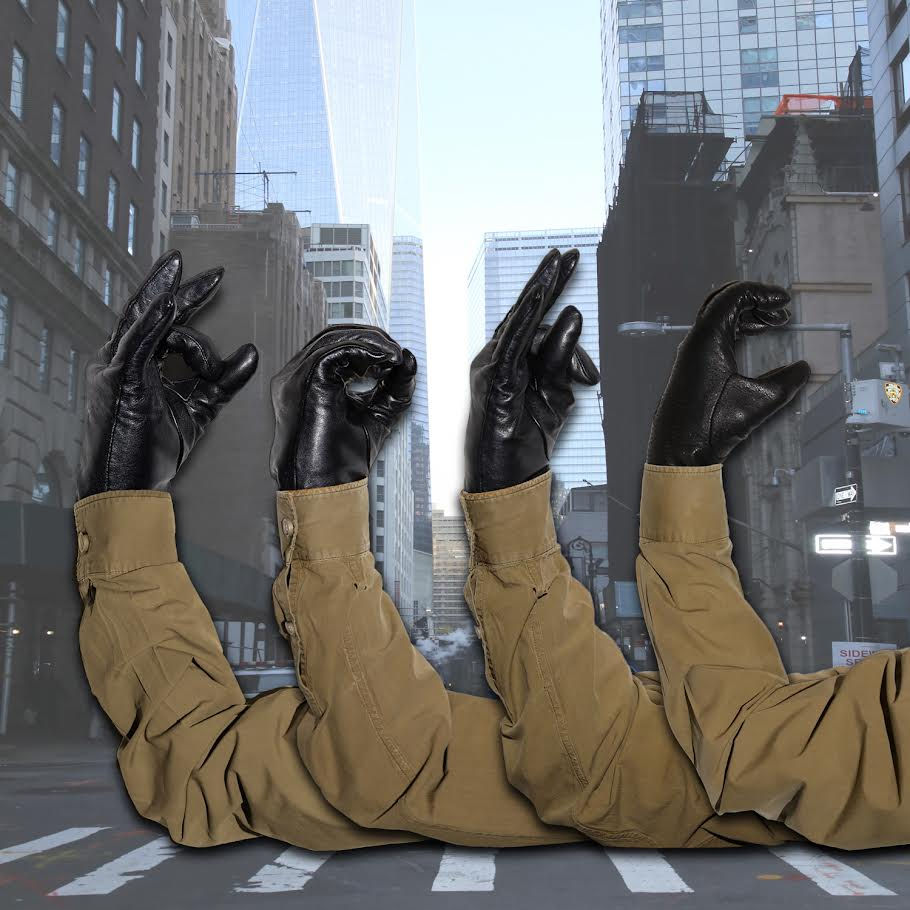
We love the cover art of REVIVAL. What was the thought process behind it?

That was a collaboration between myself and Pat Adaeze. Pat is my creative director and she had been listening to what would become the album, you know, the different tracks I had in mind. And she was getting her own ideas of how that would be visually and this (cover art) is one of the thoughts and directions that she had. This idea of trying to reach for something, you know? It now became the leading idea that we built things around. 

And I think that’s another thing about albums—they are very collaborative. It takes more than one person to bring it to life, it takes a number of people. 

We love the concept of REVIVAL. How would you describe REVIVAL as an album in your musical journey?

I think it’s an album of realisation. It’s the statement you put out when you realise something. And I don’t think it just takes one moment. Realisation—everybody, maybe, thinks some epiphany which is just one magical moment. But you realise things over time and I think that this album is realisation. 

And you can take that from whatever angle: bringing something to real life, or you realising something about yourself that you need to say and see. So I think it’s about realisation and identity, personally. Yeah, for me. And I wonder what people will take from it as well. You know, I see people are already struggling with their favourites (tracks). 

We love that you graduated from university in the US, especially in the face of a rising rap career. How did your parents take the news when you told them that you would be pursuing music as a career?

For my own situation, it was not a “this is what I’m going to do”, it’s what they were starting to see. They were starting to see that I had other interests beyond what I went to school for. Eventually, the discussion had to be tabled. 

It’s a situation where if you can show how you can do it, then there’s less for them to say. So, it was definitely “ah, o boi! This thing that you are doing, is it not just a hobby?” There were those kinds of questions and there were situations where they felt like they needed to remind me that the money that they spent, this is not how they expected me to…you know? So there was a lot of that. 

You know how it is now, you know why they do that now. It’s because they are afraid. They know the country that we are in and they are afraid of you having a life that is hard. They already know life is hard, you now go to make it harder by doing musIc! 

So there was a lot of those fears but they never came to a point where we were like “you’d do it!” It was never to that point because I think, at the end of the day, my parents believed in me as a person, and the only way was because I was also showing them—I still had a job. Because how else was I going to pay for the music? 

It wasn’t that I had a job just to please my parents. One, I needed a job because I needed money. You know, young boy in the streets, young boy going around town, you gotta have money. Two, I was using my money to fund my music. And I wasn’t asking them for anything for my music. But they were just seeing that it was happening, so they couldn’t vex all the time. I was doing enough to kind of balance it. 

But (at the time) I did not know that I wanted to fully go and do music. A lot of things had to happen before I was like “okay, I think I’m ready to say this is what I do now”. Yeah, it took a while before I now said “Alright. I’m not even working anymore. All I’m doing is music”. That came around when I joined Mavin (Records). 

Everybody’s situation is different (in terms of the rise of other artistes). I think the main thing I want people to take from it is that you gotta respect the leap of faith it takes to say “this is what I want to commit my life to”. That takes a lot of courage, a lot of stupidity too, but it takes a whole lot of courage.  Speaking of parents, we love that you’ve been a father for some years now. Has that, in any way, impacted your style of music or your view on music as a career path?

I think it has influenced it. I think that it has opened up a new way to think about the world, you know? When you have a child, it’s like you now imagine the world in a different way. In a way where it’s like it’s not just about you, it’s about what you’re gonna leave behind, like what’s gonna be after you? What of you is going to remain? You now start to care in that way as well.

I feel like that definitely affects your writing because your world is bigger. And what writing is; that you’ll see, you'll feel, you heard about. You are taking these stories and the way you are connecting with the world, and putting it back out in your own unique way that nobody else can do. So when that world gets bigger, there’s more to talk about.

Your rap was always decent. But does fatherhood make you more conscious about your writing now?

I am actually more conscious about it. Also because it is more like a challenge for me. I’m conscious about it because, most times, I don’t even need to use that word. Like I can actually figure out a way to write something that will make me not need it. From that aspect, it’s giving me more of a challenge. 

But yeah, I do think about it more. Not even just because of my kid. I also have nieces, nephews, and stuff like that. And I want them to rap along to every single line. 

But I think two things can be true. Like those are swear words specifically, but that doesn’t mean my music is going to not talk about things it needs to talk about and say real things. I mean, you heard ‘Deeper’. At the end of the day, there are conversations that still will be discussed. Maybe you are not using a swear word to say it, but that’s the beauty of words–there’s another way to say it. 

We love how the guest appearances on REVIVAL are multicultural and multinational. Was that an intentional approach or it was random? 

It was maybe a month, or a month and a half, before the album came out that I started to realise that “yo, these people are from different places”. But it wasn’t like that at the beginning, it wasn’t like “yo, I want my album to touch different cities”. It was just attracting what it was attracting. 

Is there any artiste from any country that you’d still like to work with? 

Who do I want to work with, I don’t know. The reason why I don’t really like to answer this question is that anytime I say who I want to work with, it’s like I get further away from working with them. But when I don’t say it, it just kind of happens, you know? Because, I'm not going to lie, a lot of my features come…the songs attract who it needs to be. And even if that song does not come out immediately, the song still is valuable to me. 

Like I did not know at the time that Maglera Doe Boy was one of the people that is gonna reintroduce me to the South African audience. But it was when we were in the same orbit, the energies pulled each other together because it was good, it made sense. We did a song and, there you have it, he’s on the album.

I couldn’t have told you in an interview before that, that I’d include Maglera Doe Boy. But real recognise real as they say, so let’s just leave it at that. 

How do your collaborative studio sessions come about?

Studio sessions happen in so many ways, you never know. It could be random but, sometimes, it could be pre-planned. 

‘Motho Waka’ happened because Maglera Doe Boy was in town for the Hennessy Cypher and we met up. Then we made a couple of records that we really, really enjoyed and one of them made the album. So I didn’t plan for that to happen, but it was cool. 

taves, that was more “we want someone on this song, this song fits a certain kind of person”. I had taves in mind. Eventually, at some point, the linkup happened. We didn’t have a studio session together, but we sent it to him. That was a bit more intentional. It really happens in different ways.

‘Clutch’, I heard that song played by the producer and I heard Teni’s chorus and verse on that beat. I was like “Yo, I like that song, I want that song” and I put my verse on that song. We now created a song out of the idea. Music can be made in so many different ways and collaborations can happen in so many different ways. The question is: can you take advantage of the opportunity? 

We love the dramatic voiceover at the end of ‘No Level’. What was the backstory of adding that to the song?

That’s the voice of the one and only Dare. He used to work at Mavin. When I (newly) signed to Mavin, there was a team where we used to work on Mavin’s visual content together and he was a part of that team. That whole team, they are my brethren. My first album Talk About Poe, a lot of the visuals were done by them. Since then, they’ve always rocked with me. Whenever I need them and whenever they need them, we try and come through for each other. 

My world is full of people that I’ve had interactions with over the years and he’s somebody I know. There’s also this phrase: “Ladipoe leleyi, ko n shey Ladipo”, Dare is the one who coined that phrase and I did it on a freestyle. Then from there, I put it in another song. Dare has been an oracle for me. 

He called me to tell me his no-level story, and his no-level story made it onto the album. He’s telling you a real story. 

You know you’d have somebody in your life that you’d just realise that “I used to rate you before but these days… These days, the way you are behaving… I don dey rate you too much. These days, it’s like you have no level”. When you just have that realisation that this person is actually not good for me at all, and I’m not going back. It’s not even a fight, you just realise they can’t have that access to you anymore. 

We love that you referenced Bodija on ‘One More Time’. Are you from Ibadan?

I’m not from Ibadan, no. But I do have a tie to Ibadan. I’ve been going to Ibadan since I was young, that’s where my grandparents lived. So we used to go and see them in Ibadan. I’ve been in Ibadan—guaranteed—at least once a year. My grandmother owns a school there as well. 

taves also has a song titled ‘Bodija’.

Yes now, taves too has ties to Ibadan. I think he pretty much grew up there? But he’s from Osun State, like me. 

We love that it’s REVIVAL season! What’s next? 

The album is what’s next. It might not be very obvious on the outside. But internally, the people who make the album, this is just the start of the conversation. Everything is about the album now, for the next year. 

That’s the thing. I’m from Nigeria, we don’t just applaud. You’ve gotta put yourself in front of the people to be applauded in the first place. So, that push—putting it out there, getting people to talk about it, shoutout to New Wave. You know, all those things, getting it out into the public—that’s why we’re talking to people like you. And that’s why we hope that people will see what you are doing. And then, it goes from there. 

Because it’s a whole conversation now to talk about the album and that’s what I will be doing. Then, hopefully, I can take it on the road and be out there on tour. That will be amazing. But I feel like this is an album that represents all of us in this country, me personally. I mean the kind of music that can come out of Nigeria. 


Comments


INTERVIEWS
RECENT POSTS

© 2023 by New Wave Magazine. Proudly created by New Wave Studios

bottom of page