10 Things We Love About April + VISTA
top of page

10 Things We Love About April + VISTA

Photo Credit: Foster K. White

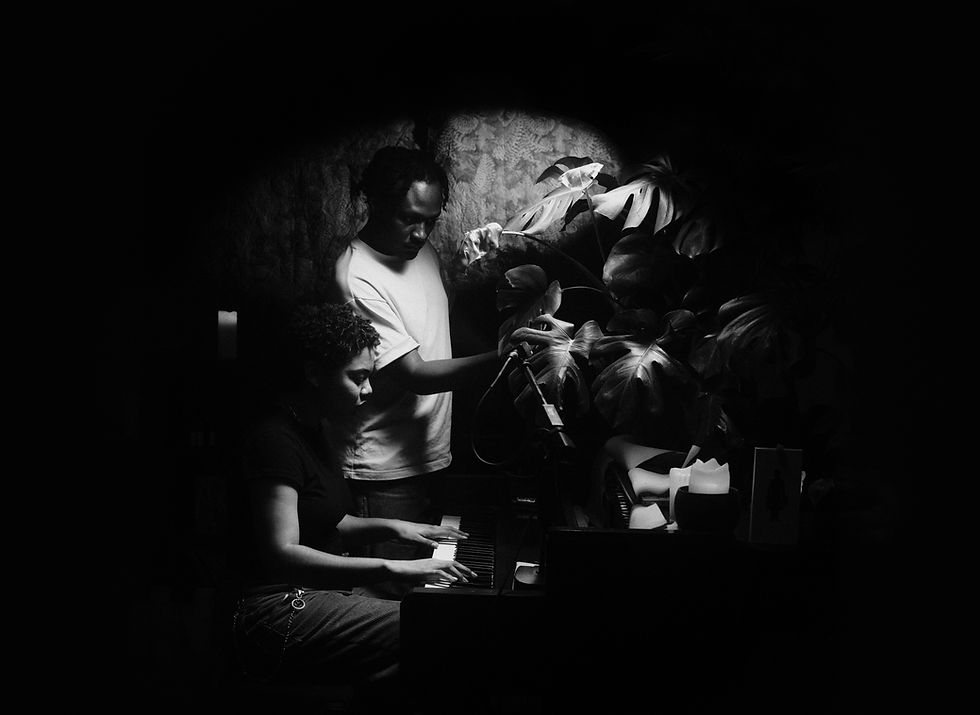
April + VISTA  are a duo that does not allow themselves to be limited in their artistic ambitions. There is no aim to have the most-streamed song, or to hit the charts with formulaic music; they create with pure intention to express what they feel, giving voice to language and feelings that often feel indescribable.


Formed in Washington, D.C. in 2014, April + VISTA have spent over a decade refining a sound rooted in curiosity, emotion, and experimentation. They do not colour outside the lines; rather, they create from their own canvases in the form of electronic music that embraces the different genres that have inspired them, such as soul, alt-pop, rock, electronic, and R&B.


In the modern age, they do not seek perfection, but rawness and authenticity. For the past year they have been building up to their debut album, Traditional Noise, which drops April 22nd via Third & Hayden - By releasing tracks like “Bless My Heart” and “Love Unspent”, and more recently 'Grotto' and now their latest offering ‘Standing in Place’.


The duo, made up of Virginia-raised singer/composer April George and Maryland-raised composer/producer Matthew Thompson, have found the time to chat to New Wave Magazine, and here are 10 things that we loved, and particularly stood out to us.


Photo Credit: Foster K. White


1 We love the fact that you have your own studio in your apartment, that’s quite cool.

Mathew: Yeah, it’s our home, and it’s where we record everything, well, smaller things. We recorded all of April’s vocals and did all of the production work right here.


Sometimes, we’ll record something down here [in the apartment], because it’s a bigger space. We recorded April’s string parts right on the floor, because we have a cool high ceiling and it had better acoustics.


April: We also have a studio space in DC, which is where we do most of our recording now, but we didn’t have it before.

So Matt is always at his desk creating beats and writing sketches all the time. I have a little writing corner upstairs, with a comfortable chair. Sometimes I read in that chair. I like to read a lot of poetry books, and try to get into the head space of trying to create lyrics and figure out what I want to talk about. I want to be intentional about what I am saying, so I use that little writing corner to do my thinking.


Some of my keyboards are here, so that’s where I’ll practice. I have gotten into modular synths lately! It’s connected to my piano, and I have been trying to find really cool sounds – to take it further than just the grand piano sounds.

Normally we create amongst ourselves and if find something cool, we’ll tap the other, and be like, hey, come look at this, I think you can work on it.


2 We love the fact that April is inspired by poetry [0838]

April: In the past, my approach to lyrics was that I wouldn’t really write anything until I felt like I got an idea or felt like I had something to write right away but  I think it wasn’t until I met Yukimi from Little Dragon, who showed me that she likes to read a lot of poetry, which is something that I have always loved.

I love to read, and I have a lot of poetry books, but I have never made that connection before. I now like to read poetry to exercise my brain to think a little bit more like a poet would.


3 Are there any poets in particular that you love?

April: One of my favourite poetry books is the anthology of Langston Hughes, which I have had since I was a child, and I go to it often because he was an inspired musician, particularly jazz musicians, a lot. I love it when he wrote poetry; the rhythm felt like jazz. So I read a lot of his poetry, and other poetry as well, to get into that mindset, so I have a better idea of what I want to say.


To me he gives us a glimpse of what it was like in the Harlem Renaissance. He’s giving us a historical account. I approach lyrics in the same way. I want to give people a glimpse of where I am in this world, in this time, whilst putting less pressure on where I am inspired by something, and I can just think about the world around me, and what I want to talk about.


4 If artists have a moral responsibility or just a duty to be authentically themselves to the public

Mathew: I think musicians have a responsibility to express themselves and where they are in the most sincere way possible. That does not mean that they have to speak necessarily to the current events, but rather where they fit into this world, which is one thing that we try to prioritise.


Folks relate the most to sincerity. That’s why I feel we have a responsibility to. Are we being honest with where we are, what’s going on and how we are being impacted by it.


April: Truly trying to dissect our worldview. I never want to tell people what to think or what to feel; I just want them to be clear about what they feel about things. We live in a very fast-paced society, where you don’t have the time to look around at your environment. My goal is to get people to slow down and think abstractly, like where do I fit in this?


5 You can’t really box April + VISTA to simply one genre, you have a very fluid sound, which is inspired by multiple sources. 

Mathew: When we work on music, we always say that we don’t consider genre because we have so many influences that we love. When we are creating, we just think about our favourite parts of our favourite music, which is what we put into our sound and whoever it comes out, we’re just happy that we enjoy it.

Some things may lean towards R&B, but a lot of stuff on the new project is very much in the alt-rock space, because that’s what we have been absorbing these past couple of years. We grew up listening to soul, rock and a lot of electronic. We have been having a lot of fun revisiting the music of our childhood, and the music that comforted us the most.


6 I like how you do an Insta dump, sharing the records that inspire each of your last few singles [2016]

April: I’m happy that you found that, and that it spoke to you. We were trying to find a way to express to people in an easy and digestible way. We felt it was very important for people to know that our influences are so wide and we care more about does this serve the song rather than we want to make this one genre forever.


Matt was listening to a lot of Curtis Mayfield at the time, and I was inspired by a lot of gospel music. I grew up in the church and primarily learnt how to write music, and how to blend my voice with other voices [there too]. Those influenced found their way into ‘Love Unspent’. We made a little carousel of all of the soul and gospel albums we listened to.


‘Groto’ is completely different! What serves the song there is rock and guitar-led music. You’ll hear a lot of Alabama Shakes and Radiohead. It’s all about the feeling we are trying to chase.


7 We love that April taught herself viola to compose and arrange her own string sections with the Viola, and Mathew taught himself the guitar for ‘Standing in Place’?

Matt: I’m a bassist but because I love the rock genre I have always wanted to make a guitar project, and build that into our sound. So I’m just taking the bass skills that I have, and I am applying them to the guitar to create some of those melodies that I have always heard in my head. ‘Standing in Place’ was one of those moments of exploration to find those sounds on the guitar.


8 We love the themes and motifs that are contained in ‘Standing In Place’

April: Out of all the songs on the project, I think ‘Standing In Place’ is my favourite. One, because it is about getting to a point of reflection in your life where things can go any way, and you’re just figuring out where you stand in all that.

I think at the time when writing the lyrics, I was at a turning point. I had just left a season of struggle. I had so much hope, but I had to learn to let go of my expectations and just be.


I had no control over whether this thing I want so badly is going to work out or not. I had to practice radical acceptance and be okay with where I end up as long as I’m putting in the effort. It’s why having the call and response of the choir was so important; it felt like I had people with me.


Matt: What made it more significant was that we wrote that song across three living situations. We were living in Virginia when we started writing it, and then we had these dreams of moving to LA because that’s what we thought we needed at the time, but it didn’t work out.


It fell through for so many reasons, and we found ourselves still here, stuck at home, which made it a very timely song. This is absolutely the right place for us, because who knows what path we would have taken if we had gone through with moving to LA to chase the dream in the traditional way.


9 How did you get the layering and elements to give off that sense of melancholy-ness 

Matt: The structure isn’t traditional at all, which I think is really exciting. We recorded a choir made up a group of our friends, and we doubled [their vocals] and tripled them. We did that in our studio in the city, which is like a warehouse photography space


10 It’s inspiring that you both are always chasing something intangible, rather than surface level. What can we expect from the album

Matt: One core aspect of our work, and definitely on this project, is that we’re constantly figuring things out in the process. Because we practically record everything at home, and we are always listening for a new way to express our experiences. We are learning and making mistakes constantly. Projects, especially this one, are a malamaination of our trials and errors in the music, which is what I’m proud of.


Right now, a lot of musicians and aspiring musicians feel like they need to come up with a perfect product available before they share with anyone, and I think that contributes to this pressure to dive into things like AI. I think we are so into exploring our flaws and celebrating those things. That’s what makes it uniquely you.


April: Expect it to unlock a certain level of nostalgia within you, well I struggle to say nostalgia because it’s such a trendy thing but we had to dig deep into our inner child to pull out inspiration, and that was a very important strand that tethers all the songs together. Expect to hear things that are familiar but in a different way.


Listen here


INTERVIEWS
RECENT POSTS

© 2023 by New Wave Magazine. Proudly created by New Wave Studios

bottom of page