top of page

Every Generation Thinks It Discovered Denim: Tommy Hilfiger’s Always Denim.

Every generation seems to believe it discovered denim.

It happened when jeans became a uniform for rebellion, again when the silhouettes of the '90s loosened and denim found itself woven into music, youth culture and street style. Then came the skinny jean, the vintage revival, the return of the low-rise, followed inevitably by the return of everything baggy. Fashion has spent decades declaring which jeans are in, which are out and which forgotten silhouette deserves another moment in the sun.

Somewhere between all of that, denim simply stayed.

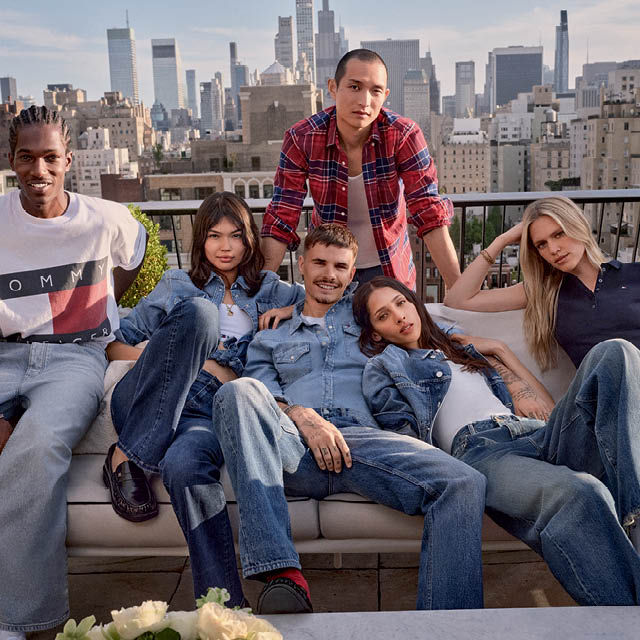
For Fall 2026, Tommy Hilfiger returns to this idea with Always Denim, a campaign that doesn't attempt to reinvent one of fashion's most familiar fabrics. Instead, it celebrates the reason denim has survived almost every shift in fashion in the first place: its ability to become whatever the person wearing it wants it to be. 

At the centre of this latest chapter is Romeo Beckham. Set within The Mark Hotel, one of New York's longstanding fixtures of the city's style scene, Beckham is joined by Dutch model and tastemaker Yasmin Wijnaldum and a new generation of fashion faces. Rooftop sunsets, hotel rooms and escapes through the city become the backdrop for a campaign that feels less concerned with creating a perfectly polished fashion fantasy and more interested in capturing the ease of simply getting dressed and going somewhere. 

And naturally, everyone is wearing jeans.

There is something almost wonderfully ordinary about it. Denim shirts are tucked into denim trousers. Jeans sit beneath simple white T-shirts. Plaid is thrown over a vest. The Tommy flag appears oversized across relaxed tees while waistlines and washes change from person to person. Nothing feels particularly complicated, because denim has never really needed to be.

That simplicity is perhaps the campaign's strongest statement.

"There's no right or wrong way to wear denim, that's the whole point," Beckham says in the campaign notes, describing how easily the fabric can move between leather jackets, white T-shirts, rock references, prep and vintage influences. It's an uncomplicated observation, but one that gets to the heart of why denim continues to survive fashion's relentless cycle of reinvention. 

Because for something so ordinary, denim can be strangely personal.

A pair of jeans can reveal something about its wearer before they have said a word. Baggy enough to gather around a trainer. Dark indigo and perfectly straight. Faded almost white from years of wear. Low at the hip, high at the waist, cut, patched, embroidered or preserved in almost pristine condition. Denim eventually starts to carry evidence of the person living inside it, creasing at the knee, softening at the seams and fading differently depending on how it has been worn.

Perhaps that is why fashion has never quite managed to leave it behind.

A Story That Started Long Before Romeo

For Tommy Hilfiger, that relationship with denim isn't something newly constructed for Fall 2026.

Long before Tommy Hilfiger became the global expression of American prep recognised by its red, white and blue flag, its founder was a teenager travelling from Elmira to New York City in search of jeans. Hilfiger recalls buying them, customising them and selling them from the boot of his car. Decades later, he still describes denim as the "pinnacle of self-expression." 

That early instinct, taking something familiar and making it individual, feels remarkably close to what the Always Denim campaign is communicating now.

The brand's relationship with the fabric continued throughout its earliest collections in the 1980s, before TOMMY JEANS arrived in 1996 with a younger, more relaxed interpretation of the house's American wardrobe. Then, in 1997, came one of those fashion images that would outlive the campaign it belonged to.

Aaliyah in Tommy Hilfiger.

Her relationship with the brand helped make oversized silhouettes, baggy jeans and bold colour-blocking an enduring part of the visual memory of '90s fashion. It represented something larger happening around the label at the time, as Tommy Hilfiger's American prep codes collided with music, street style and youth culture. 

Those references matter because fashion has developed a complicated relationship with nostalgia. The industry is constantly reaching backwards, searching archives and resurrecting silhouettes in the hope that something familiar might suddenly feel new again.

Tommy doesn't need to manufacture that nostalgia.

It lived it.

And Always Denim becomes more interesting when viewed as another frame in that much longer story.

The Same Fabric, Another Generation

Romeo Beckham therefore isn't being positioned as the beginning of Tommy's denim story. He's entering one that already existed.

His wardrobe moves through several interpretations of that history, from the relaxed, '90s-inspired Theo baggy jean to the more classic straight-leg Dover. Wijnaldum shifts the silhouette again through the high-rise Sarah and relaxed low-rise Daisy, creating four very different interpretations of something as simple as a pair of jeans. 

That's where the idea of Always Denim starts to make sense.

The campaign isn't really arguing for one definitive silhouette.

Quite the opposite.

Fashion loves rules. This season's trousers must be wider. Last season's waistline is suddenly wrong. A silhouette disappears, only to return five years later with a new celebrity attached to it. But denim has always had a strange ability to exist slightly outside those rules.

Someone somewhere will always be wearing skinny jeans regardless of what the runway says. Someone else will refuse to abandon a battered pair of vintage straight-legs. Another will discover low-rise jeans for what feels like the first time, while someone old enough to remember their previous reign watches the revival unfold with slight horror.

And somehow, all of them are right.

That's the freedom that makes denim so enduring.

It can absorb the personality of whoever happens to be wearing it.

Always Denim

There is something fitting about placing this latest chapter in New York.

The city has existed quietly throughout Tommy Hilfiger's story, from the young designer travelling there in search of jeans to the American identity that would eventually define his label. Now, decades later, another generation occupies that landscape, gathering above the city at The Mark dressed in the same fabric, only differently. 

Perhaps that is why denim refuses to disappear.

It doesn't belong to Tommy Hilfiger. It doesn't belong to Romeo Beckham, Aaliyah, the '90s or even the generation currently pulling another forgotten silhouette from the archive and declaring it new again.

Denim belongs to whoever happens to be wearing it.

Fashion will inevitably change its mind again. Jeans will become wider, narrower, darker, lighter, cleaner and more distressed. Waistlines will rise before falling once more. Another generation will discover a photograph from twenty years earlier and decide that this is how denim should be worn.

And somewhere in New York, someone will still be wearing a white T-shirt and a pair of blue jeans.

Maybe Always Denim isn't such a dramatic statement after all.


Comments


INTERVIEWS
RECENT POSTS

© 2023 by New Wave Magazine. Proudly created by New Wave Studios

bottom of page