Director of Photography Honglin Zhu Talks Indie Films, Vertical Dramas And Post-Conscious Cinematography
top of page

Director of Photography Honglin Zhu Talks Indie Films, Vertical Dramas And Post-Conscious Cinematography

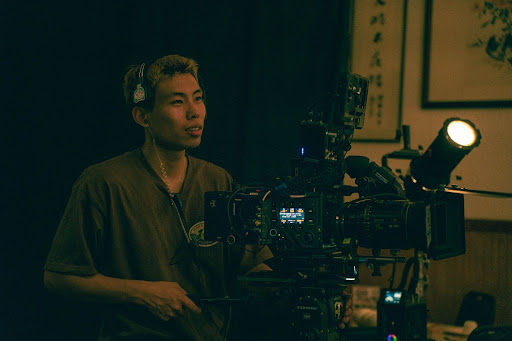
The modern cinematography landscape demands a rare kind of chameleonic talent; a Director of Photography must be equally equipped to light an oppressive, shadow-drenched gangster film for the silver screen and architect a vibrant, hyper-efficient visual pipeline for a smartphone-based vertical series. Los Angeles-based cinematographer Honglin Zhu has carved out a niche at this intersection.

For Zhu, the camera is where narrative intuition meets technical precision. "Early in my journey, I came to a pivotal realization: my true passion lies not in directing itself, but in the sheer thrill and creative agency of controlling the visual frame," Zhu says. "This insight drove my decision to pursue cinematography as my primary career path.” His time at film school, then sharpening his craft at Chapman University profoundly honed his skills to the craft of cinematography. “Even now, every time I turn on the camera and look through the viewfinder, a wave of anticipation and excitement rushes through me," he said.

This excitement is sparked by Zhu’s own creative philosophy, which he calls "post-conscious cinematography," an approach that relies heavily on advanced tech pipelines to protect the integrity of the image.

"By deeply understanding color science, ACES workflows, and DaVinci Resolve, I’m not just exposing a sensor on set—I’m capturing and protecting data in a way that gives the post-production team and the colorist the ultimate creative freedom," Zhu explains. 

"I personally look at technology as a bridge for communication,” he adds. “By using AI-driven generative tools like Midjourney or advanced pre-visualization workflows during pre-production, I can translate abstract emotional concepts into highly accurate style frames and lighting blueprints before we even turn on a single light."

Few filmmakers can balance left and right brain creativity and logic. The Chinese cinematographer has managed everything from principal photography to the final color grade across indie films, narrative shorts, major commercial campaigns and viral digital media—pushing boundaries and even getting one of his projects mentioned in The Wall Street Journal, which recently featured the rise of vertical dramas this spring.

Zhu’s narrative eye has generated critical acclaim on the global festival circuit. His moody, atmospheric lensing on the short film Mingling secured a Remi Award at the WorldFest-Houston International Film Festival, while his poetic, nostalgic work on Miracle (Bai Du Ren) earned recognition at the Los Angeles Film Awards.

"I don’t just focus on making images look beautiful — I care about how the camera, lighting, composition, and atmosphere help tell the story and shape the audience’s emotions," Zhu notes. 

"For Mingling, the definitive visual trademark was a commitment to uncompromising low-key lighting and motivated realism” he explains. “My goal was to mirror the dark, gritty underbelly of a gangster narrative; I wanted the environment to feel inherently oppressive and shadow-drenched. We relied heavily on practical lights already embedded in the locations to create a raw, authentic texture. My biggest stylistic choice was practicing extreme visual restraint—there were many sequences where I chose not to introduce any movie lights at all."

This dedication to raw realism is heavily inspired by master cinematographers like Rodrigo Prieto and Emmanuel Lubezki. "Lubezki's uncompromising dedication to natural light, alongside his deliberate lens choices and fluid camera movements, commands deep study," Zhu says. "Evoking this sense of reality is not just my primary objective—it is, to me, the ultimate form of cinematic beauty."

Zhu’s ability to adapt has allowed him to transition seamlessly into commercial spaces, lensing global campaigns for powerhouse athletes like Chinese professional golfers Li Haotong for Descente and He Muni for FILA, as well as operating the camera for TikTok's Super Brand Day.

"Commercial projects demand a more versatile creative framework," Zhu explains. "Instead of dogmatically pursuing raw realism, I adapt—infusing a foundation of authenticity with a polished aesthetic tailored to mainstream appeal. Given the compressed schedules of commercial sets, these projects place a high premium on my leadership and communication skills."

That high-efficiency mastery has made Zhu a visual architect part of the buzzy, booming vertical drama industry. He helmed the visual identity for StardustTV's When I Stop Loving You (42 million views), orchestrated TikTok Shop's high-traffic Black Friday series Fated to Find You, and operated the camera for SarosTV's hit Moonlight Rust (53 million views). He also served as gaffer on massive vertical hits like Vicious (65 million views).

"With vertical dramas, efficiency is your primary creative tool because the daily page count is insane," Zhu says. "Technically, my approach shifts away from moody, heavily shadowed cinematic lighting toward a more optimized mid-to-high-key look. Since this content is consumed entirely on mobile phones, deep blacks just turn into muddy pixels or reflections of the viewer's own face, so, I keep the lighting vibrant and bright, focusing on framing characters tightly in the vertical center and keeping the tech footprint light so the camera can move as fast as the story does. It wouldn’t make sense any other way."


INTERVIEWS
Mens Journal 1x1.png
RECENT POSTS
Mens Journal long.png

© 2023 by New Wave Magazine. Proudly created by New Wave Studios

bottom of page